

Association of Multicultural Society Experts Calls for Legal Recognition Ahead of the Era of 3 Million Immigrants
The Association of Multicultural Society Experts has proposed a phased roadmap for establishing legal certification to strengthen professionalism in the field of immigrant settlement support.
# Association of Multicultural Society Experts Calls for Legal Recognition Ahead of the Era of 3 Million Immigrants
The Association of Multicultural Society Experts has proposed a phased roadmap for establishing legal certification to strengthen professionalism in the field of immigrant settlement support.
As Korea Approaches the Era of 3 Million Immigrants, On-the-Ground Qualification System Faces a “Double Mismatch”… Association of Multicultural Society Experts Urges “Prompt Legal Recognition of Qualifications”
- With the number of foreign residents surpassing 2.78 million and expected to reach 3 million by 2026, concerns have been raised that an overhaul of the qualification system for on-the-ground support for immigrant settlement is urgently needed.
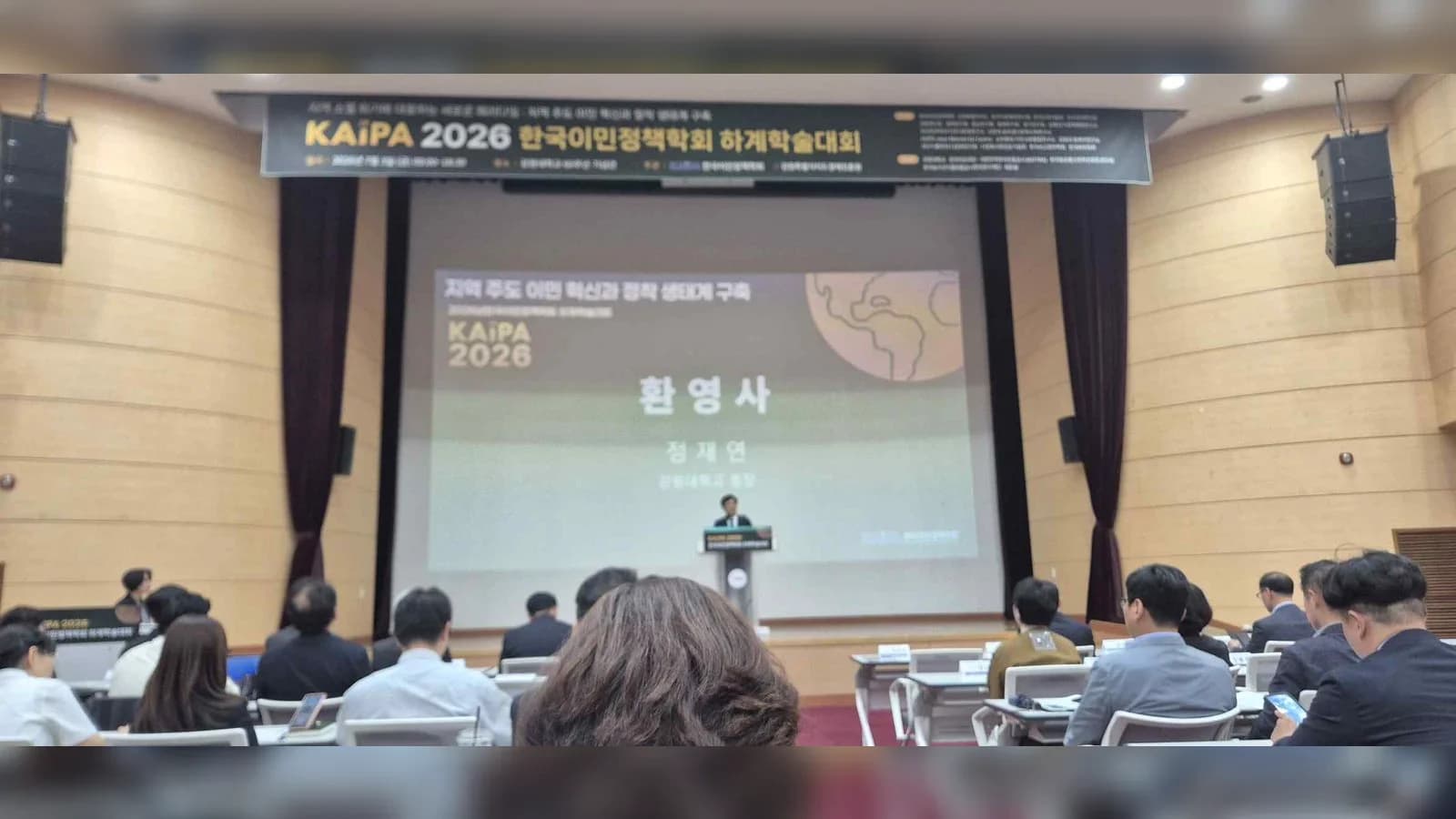
- At the academic conference of the Korean Society for Immigration Policy, presenters Kim Min-ju of Kyungsung University and Kim Chun-soo of the Gaon Nuri Social Cooperative delivered a joint presentation diagnosing the “double mismatch between immigration expertise and legal recognition” and presented a roadmap for the phased legal certification of multicultural society experts.
Stagnant Statistics, Exploding On-the-Ground Demand... “The Qualification System Is Stuck in the Past”
With foreign residents in Korea totaling 2,783,247 (as of the end of 2025)—accounting for 5.44% of the total population—and annual participants in the Social Integration Program (KIIP) exceeding 70,000, the demand for direct counseling and support services for immigrants is skyrocketing. Furthermore, the demand for specialized personnel is expected to surge even more due to the phased mandatory implementation of the KIIP under the Ministry of Justice’s “2030 Future Strategy for Immigration Policy” and the introduction of regional immigration package programs. However, it has been pointed out that statutory hiring standards in the field still primarily rely on social workers and healthy family counselors—who lack specialized training in immigration and multicultural issues—resulting in a serious gap in expertise in practical settings.
The Trap of “Dual Mismatch” and the Association’s Assessment
Presenters Kim Min-ju and Kim Chun-soo defined the “dual mismatch” as a structural flaw in the frontline settlement support delivery system.
- Lack of legally recognized expertise: Multicultural social workers, who possess specialized coursework in immigration law, immigration policy, residence status, and other specialized subjects; as of 2025, 12,185 professionals have been trained. However, they remain confined to a “certificate of completion” system based on ministerial directives—which constitutes a non-state qualification under the Framework Act on Qualifications—and thus cannot serve as a standard for regular employment at frontline agencies.
- Lack of Immigration Expertise in Qualifications: Conversely, social workers and healthy family counselors—who hold legal hiring authority at family centers and social welfare centers—lack any specialized knowledge of immigration-related laws, such as visa, residency, and nationality laws, within their standard training curricula, leading them to face limitations in their fieldwork.
Dr. Kim Tae-hee, President of the Association of Multicultural Society Experts, stated, “Cases requiring advanced knowledge of immigration law—such as changes to F-6 residency status or determining access to services for undocumented residents and asylum seekers—frequently arise at family centers and counseling centers for migrant women,” and "The current certification structure has a clear structural flaw in that it cannot keep up with on-the-ground demands," she emphasized.
Three-Step Certification Roadmap... Association: "We Will Establish a Permanent Consultative Body with the Government and Universities"
To address these issues, the two presenters called for a phased improvement plan, contingent on whether legislation is amended.
- Short-term tasks (1–2 years): As measures that can be implemented immediately without legislative amendments, provisions giving preference to the hiring of Multicultural Society Specialists should be explicitly included in ministry-specific program guidelines, such as those for family business guidance and social welfare center operations. Furthermore, it is urgent to establish an integrated personnel database for the systematic management of trained personnel and to compile official statistics on their activities.
- Medium-term tasks (3–5 years): A “Bridge Program” should be introduced to allow existing professionals—such as social workers and healthy family counselors—to complete core courses for multicultural society specialists in an accelerated format, and pilot placements should be expanded to university international affairs offices and employment support centers for international students.
- Long-term tasks (5–10 years): Through amendments to the “Immigration Control Act” or the “Social Welfare Services Act,” Multicultural Society Specialists should be established as a national certification, and a legal basis should be established to mandate their placement in frontline agencies providing settlement support.
Chairperson Kim Tae-hee stated, “The three-step roadmap proposed at this academic conference is a very realistic and concrete solution,” adding, “The Association of Multicultural Society Experts will play a pivotal role in establishing a ‘permanent consultative body’ among relevant government ministries—including the Ministry of Justice, the Ministry of Gender Equality and Family, the Ministry of Health and Welfare, and the Ministry of Education—and universities.” She also added, “We will spare no effort in utilizing the Association’s resources and research capabilities to achieve the short-term goals of establishing an integrated personnel database and creating new official statistical indicators.”
Conclusion
In concluding this presentation, presenters Kim Min-ju and Kim Chun-soo, along with the Association of Multicultural Society Experts, stated, “The legal certification of multicultural society experts is not a matter of creating new social burdens, but rather a task of institutionally establishing excellent professional resources that have already been verified through universities and other institutions.” They strongly urged the Ministry of Justice—the lead agency for immigration integration policy—to take the lead in breaking down inter-ministerial barriers and establishing integrated governance.
Related Articles
- Policy
- Policy
- Policy
- Policy
- Policy
- Policy