

Why did Sejong create a new writing system, and why did he leave an explanation despite the opposition?
The process of creation, beginning with the gap between spoken and written language and leading to an explanation of the Hunminjeongeum
Reference Desk
Reference material for TOPIK, language institutes, and Korean-learning plans.
The process of creation, beginning with the gap between spoken and written language and leading to an explanation of the Hunminjeongeum
A choice that goes beyond the language of admission to consider living costs, scholarships, and your next steps in Korea
Rather than trying to handle everything on your own, choosing the areas you want to understand and express yourself in
Names with the Same Spelling but Different Sounds: How Hangul Meets Other Languages
For learners abroad, introductory lessons and everyday expressions can be the first step in learning Korean.
In a 2024 EBS Hangul Day report, Uzbek student 버부르 쿠츠커러프, then at Busan University of Foreign Studies, recalled mistaking a part-time employer’s “욕봤다,” which acknowledged a day’s hard work, for a scolding over something done wrong.
Learning Hangul is a starting point. Its syllable blocks, changes in pronunciation and grammatical particles show why learning to read the script and learning Korean go hand in hand, while each requires study.
Letters, petitions and names on everyday objects: records presented by the National Hangeul Museum show how Hangul met people’s daily needs. For Korean learners, writing to convey their own thoughts can be a starting point for understanding this history.
Seoul Foreign Resident Center: The TOPIK Levels 5–6 prep program offers in-person vocabulary on Sunday mornings and past-question practice by Zoom in the afternoon. It is for learners with ability equivalent to TOPIK Level 4 or above; call first, then visit to register on a first-come basis.
Yeonnam Global Village Center is recruiting additional students for in-person Beginner TOPIK and online Sogang Korean 3B and Practical Korean classes. This article covers the direct application link, post-application contact steps and the MY SEOUL+ end field showing 0:00 on October 3.
Yangcheon Foreign Resident Center’s ‘TOPIK Level1’ is a free Zoom class for 20 foreign residents. It runs Sundays from 12 noon to 3 p.m., October 18 through November 8, and applications are accepted through 6 p.m. on October 15.
Explains the role of the Ichon Global Village Center and the meaning of its online 1-to-3 speaking format, and gives the schedule for free Korean mentoring for foreign residents.
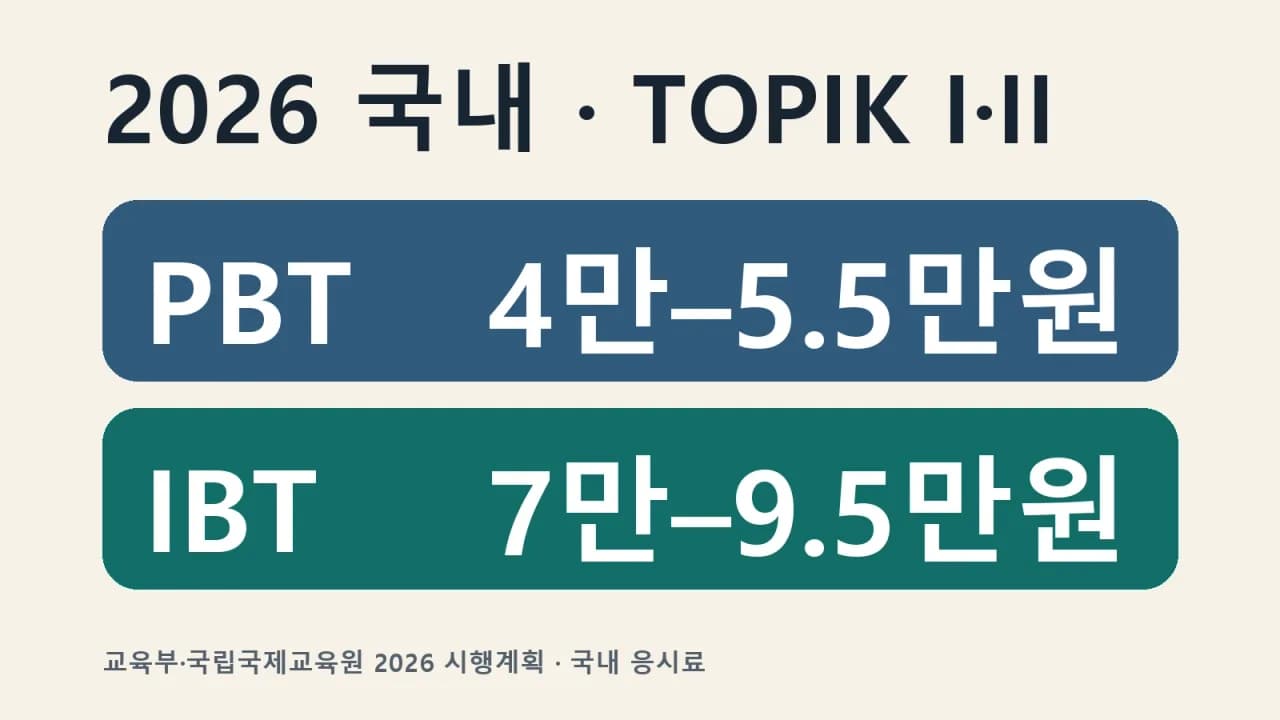
This Korean-language document summarizes the formats, domestic test fees, and score validity periods for TOPIK PBT and IBT, as outlined in the 2026 announcements from the National Institute for International Education and the Ministry of Education, and explains why test-specific details must be reconfirmed in the official announcements.
Kunsan National University’s 2026 winter Korean language program takes online applications September 14–25; originals are due October 8. It covers the Gunsan campus, 10 weeks/200 hours, a two-term minimum, KRW 4.1 million starting cost, KRW 8 million balance proof, and application steps.
HUFS opened applications September 1 for its Winter 2026 regular Korean program; deadlines are October 16 or 30 by nationality group. Covers Dongdaemun-gu, Seoul, 10 weeks/200 hours, KRW 100,000 application, 1,600,000 tuition, 30,000 insurance, nationality-specific documents and online steps.
Gachon University Korean Language Center accepts Winter 2026 applications Sept. 7, 10 a.m.–Oct. 30, 5 p.m. This guide covers the TOPIK Level 2 minimum for individual applicants, Seongnam Global Campus, 10 weeks/200 hours, application and tuition fees, D-4 documents, and Jinhak Apply.
Hannam University’s 2026 winter regular Korean program Round 2 closes September 27 at 23:55 KST. Document-screening passers take a Zoom Korean interview; October 6 results, October 6-9 payment, separate D-4-1 documents for general/Chinese applicants, KRW 1,400,000/semester, refunds and Daejeon.
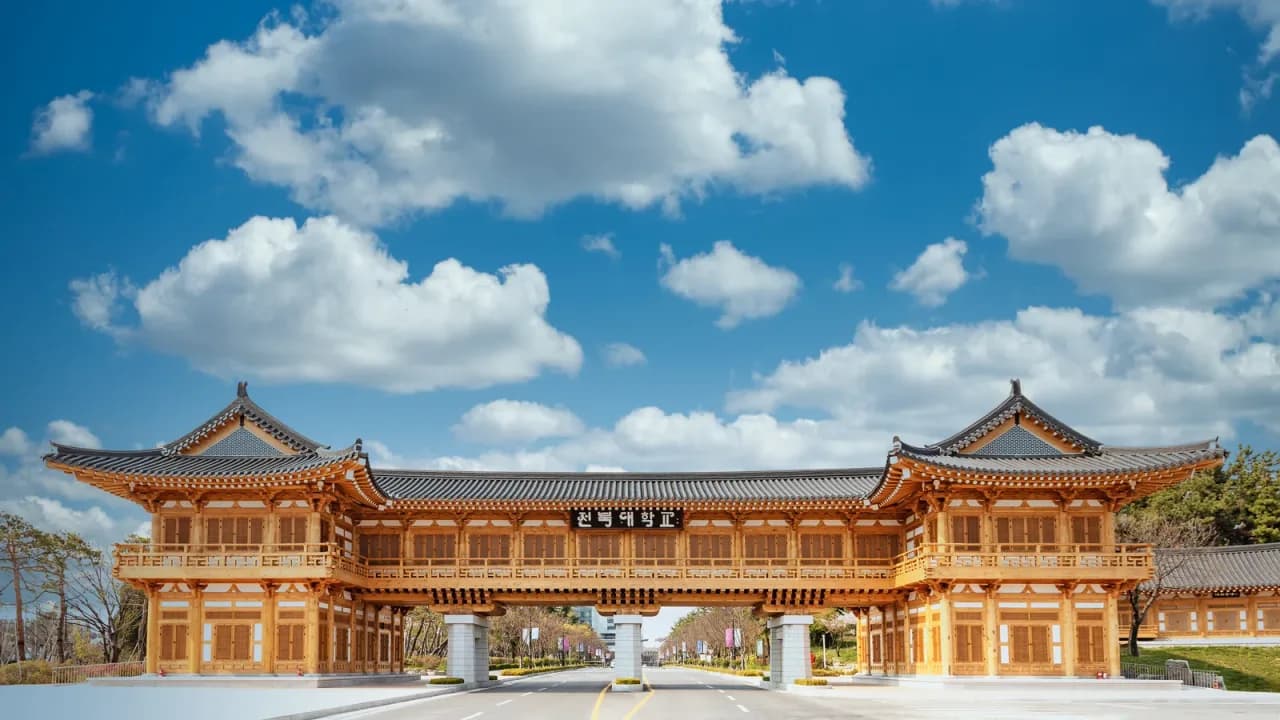
Jeonbuk National University Winter 2026 Korean program: online applications Aug. 31–September 29; classes start December 1. 10 weeks/200 hours, KRW 1,300,000 per term. D-4: 2+ terms and KRW 8,000,000+ bank balance certificate. Non-D-4: separate document route at Jeonju main campus.