

Study Webtoon, Content and Design in Korea: Portfolio and Admissions Guide
A guide for international students interested in webtoon, design, media, game or content studies in Korea, covering portfolios, admissions, scholarships and career routes.
Key Points
- Korean-linked webtoon platforms have strong global influence.
- Related majors include design, media, content, game, video and illustration.
- Portfolio requirements can be central in international admission.
- Students need to turn K-content interest into actual work samples and a major plan.
Webtoons are a prime entry point for international students to develop an interest in Korean content. Korean platforms such as Naver, Kakao, LINE, and Tapas wield significant influence in the global webtoon market, and webtoon IP is being adapted into dramas, animations, and games. Studying Korean webtoons and content abroad can be seen as a process of turning one’s fandom into a major and a portfolio.
In this field, simply “liking webtoons” is not enough. Actual majors are divided into categories such as visual design, comics and webtoons, media content, games, video production, illustration, storytelling, and digital content. The required portfolio work varies depending on whether you draw, write stories, or wish to produce videos or games.
International students can apply through undergraduate international admissions or graduate programs. For content and design majors, not only academic grades and language proficiency but also portfolios, personal statements, work descriptions, and interviews may be crucial. Since file formats, the number of pieces, themes, and submission methods vary by university, you should check the admission guidelines first.
One of the advantages of studying in Korea is the proximity to the industry and the content consumption market. Webtoon platforms, production companies, design studios, game companies, and video production firms all operate within a single ecosystem, allowing students to witness firsthand how K-content is expanding into the global market. However, rather than assuming immediate employment or a professional debut, it is more accurate to describe this as an environment for building major-specific competencies and developing a portfolio.
You should also consider costs and scholarships. In design and content-related fields, expenses beyond tuition may include equipment, software, materials, and costs for exhibitions and portfolio production. Scholarships from the Global Korean Scholarship (GKS) and universities for international students vary depending on your major, GPA, and language proficiency requirements. Since portfolio-based admissions require a long preparation period, you must organize your work well in advance of the application deadline.
Career paths are not limited to webtoon artists. They extend widely to include webtoon producers, storyboard and story writers, character designers, game and video artists, content marketers, translators and localizers, and IP planners. It is also possible to work in roles that introduce Korean content in one’s home country or connect with local platforms.
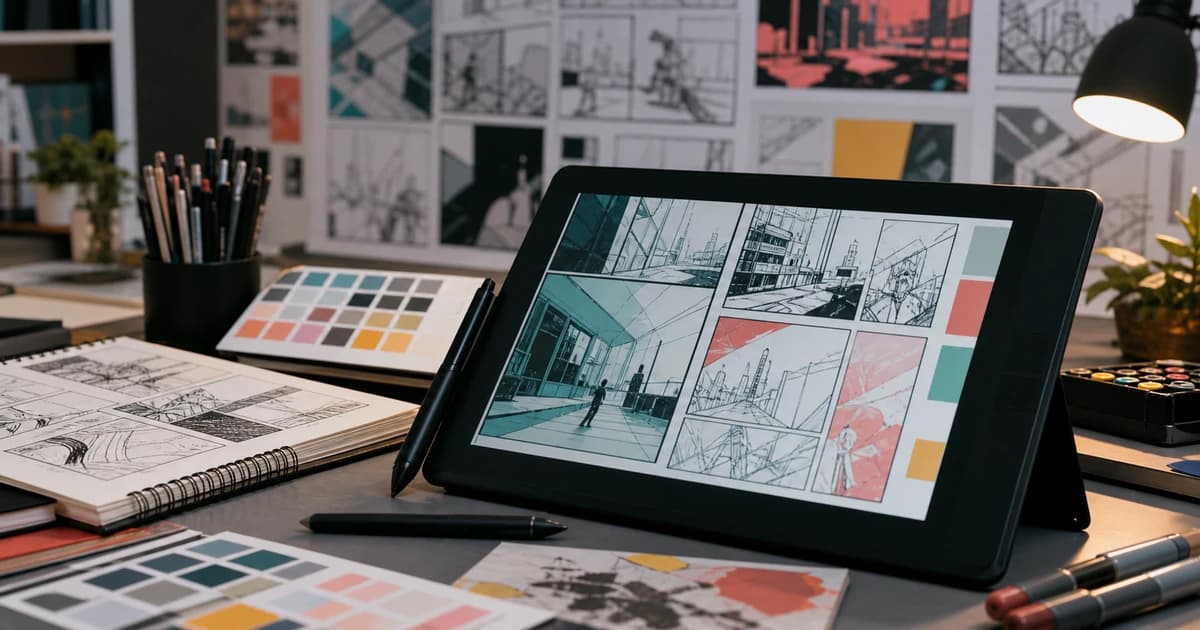
In this field, a portfolio can effectively serve as a second report card. It is more important that the work aligns with the major you are applying for than the sheer number of pieces. If your goal is to create webtoons, you’ll need storyboards, character designs, direction, and finished manuscripts; if you’re aiming for content planning, proposals, market analyses, and campaign deliverables may be more persuasive.
Language strategies also differ. While Korean may seem relatively less important in practical and portfolio-based admissions processes, both Korean and English communication skills will influence your performance in classes, feedback sessions, and team projects. In particular, if you’re aiming for graduation projects, internships, or field projects, it’s a good idea to develop a Korean language study plan alongside your application preparations.
For webtoon and content majors, it’s advisable to compile links to works that can be made public before applying. If the styles of your personal social media, portfolio site, and PDF portfolio differ significantly, evaluators will have difficulty identifying your strengths. Organizing your body of work during the application preparation stage will also help you choose the right school more accurately.
Applicants must first decide which major they wish to pursue: Webtoon Creation, Design, Video, Games, or Content Planning. Check each university’s requirements regarding the number of portfolio pieces, file formats, and whether an interview is required. Additionally, calculate the costs for equipment, software, and materials separately from tuition. It’s also a good idea to compare the balance of Korean and English courses, as well as opportunities for graduation projects and internships.
Related Articles
- Universities
- Universities
- Universities
- Universities
- Universities
- Universities
Comments
Please sign in to post a comment.
You will return to this article after sign-in.
Sign inNo comments yet.