

Korean Society for Immigration Policy: Local Governments and Communities Are Key to Immigrant Social Integration
At Session 6 of the Summer Academic Conference of the Korean Society for Immigration Policy, participants discussed a comparison of social integration policies in nine countries around the world and a Korean-style community integration model.
# Korean Society for Immigration Policy: Local Governments and Communities Are Key to Immigrant Social Integration
At Session 6 of the Summer Academic Conference of the Korean Society for Immigration Policy, participants discussed a comparison of social integration policies in nine countries around the world and a Korean-style community integration model.
Korean Society for Immigration Policy Compares Social Integration Policies in 9 Countries... Proposes a Korean Model for Community Integration
Case Studies from the U.S., Canada, Australia, the U.K., Germany, France, Japan, Singapore, and Taiwan
In an Era of Regional Decline, the Need to Establish a Korean Model of Community Social Integration Governance Is Highlighted
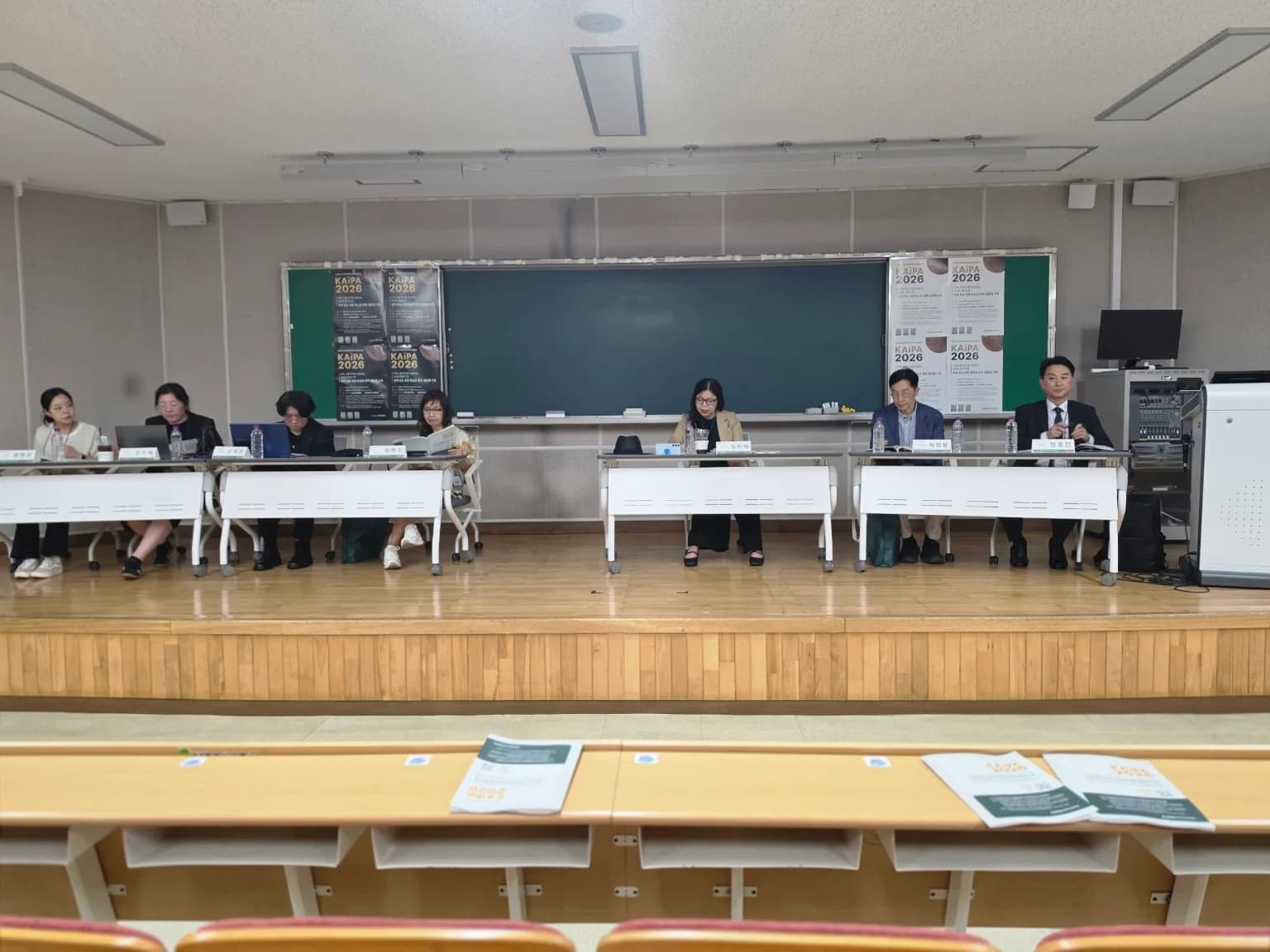
The Korean Society for Immigration Policy (President Lim Dong-jin) held the 4th Session of the 6th Subcommittee at its 2026 Summer Academic Conference under the theme “Comparative Analysis of Global Immigration and Social Integration Policies.” The session compared and analyzed local government social integration policies in major countries around the world and explored directions for developing a Korean-style community-based social integration model.
This session comprehensively addressed the social integration policies of local governments in nine countries worldwide, including the United States, Canada, and Australia; the United Kingdom, Germany, and France; and Japan, Singapore, and Taiwan. The presenters emphasized that the social integration of immigrants can no longer be addressed solely through institutional designs by central governments, and that the role of local governments and the communities where immigrants actually reside and live is crucial.
First, Professor Im Dong-jin of Soonchunhyang University presented “A Comparison of Local Government Social Integration Policies in the United States, Canada, and Australia.” Focusing on case studies from Chicago (U.S.), Toronto (Canada), and Melbourne (Australia), Professor Im analyzed that the United States has prioritized economic integration, Canada has focused on settlement support, and Australia has developed community-based social integration. He explained that these countries offer important insights for Korea, particularly in how local governments and civil society collaborate to support immigrants’ employment, language education, civic participation, and connections to the local community.
Next, Professor Hwang Mi-hye of Busan University of Foreign Studies presented “A Comparison of Immigrant Social Integration Policies and Paradigm Shifts in the United Kingdom, Germany, and France.” Using case studies from London, Frankfurt, and Paris, Professor Hwang analyzed how major European cities are restructuring their social integration policies around multi-level governance, public-private partnerships, place-based social integration, and data-driven policy evaluation. In particular, she emphasized that social integration should be understood as a process in which immigrants share spaces within local communities and participate as citizens, going beyond the mere provision of educational and welfare services.
Finally, Professor Ha Jeong-bong of Suncheon National University presented “A Comparative Study of Community Integration Policies for Migrants in Japan, Singapore, and Taiwan.” Professor Ha compared multicultural coexistence in Hamamatsu, Japan; social integration through urban spatial design in Singapore; and policies for new residents and civil society governance in Taipei, Taiwan. He explained that East Asian countries, in particular, are developing tailored social integration policies suited to their regional characteristics amid common challenges such as low birth rates, aging populations, and an increase in foreign workers.
All three presentations demonstrated that social integration policies in major countries worldwide are shifting from a centralized, uniform approach led by central governments to on-the-ground governance centered on local governments and communities. They also confirmed that the effectiveness of social integration increases when language education, settlement support, employment linkage, the creation of community spaces, civil society participation, and the strengthening of immigrant leadership are combined.
In particular, the presenters emphasized the need to view the social integration of immigrants not merely as a welfare policy or adaptation education, but as a strategy for sustainable regional development, addressing the demographic crisis, and securing human resources. Given that South Korea is also facing a growing foreign resident population and the threat of regional depopulation, the speakers argued that the country must strengthen the policy capabilities of local governments and establish a Korean-style community-based social integration governance system involving the central government, local governments, and civil society.
Professor Lim Dong-jin (Sunchang University) stated, “This session is highly significant in that it compared the social integration policies of local governments in nine countries around the world using a unified analytical framework,” and “Going forward, South Korea should not leave the social integration of immigrants solely to the central government’s institution-centered policies, but rather develop a field-centered integration model led by local communities and implemented by local governments,” he added.
Related Articles
- Policy
- Policy
- Policy
- Policy
- Policy
- Policy