

Du Học Hàn Quốc GEA Holds Study in Korea Seminars in Vietnam
June 13–14 events for students who had taken their high school graduation examinations and their parents covered costs, eligibility, documents, D-2/D-4 visas, university selection and post-arrival support
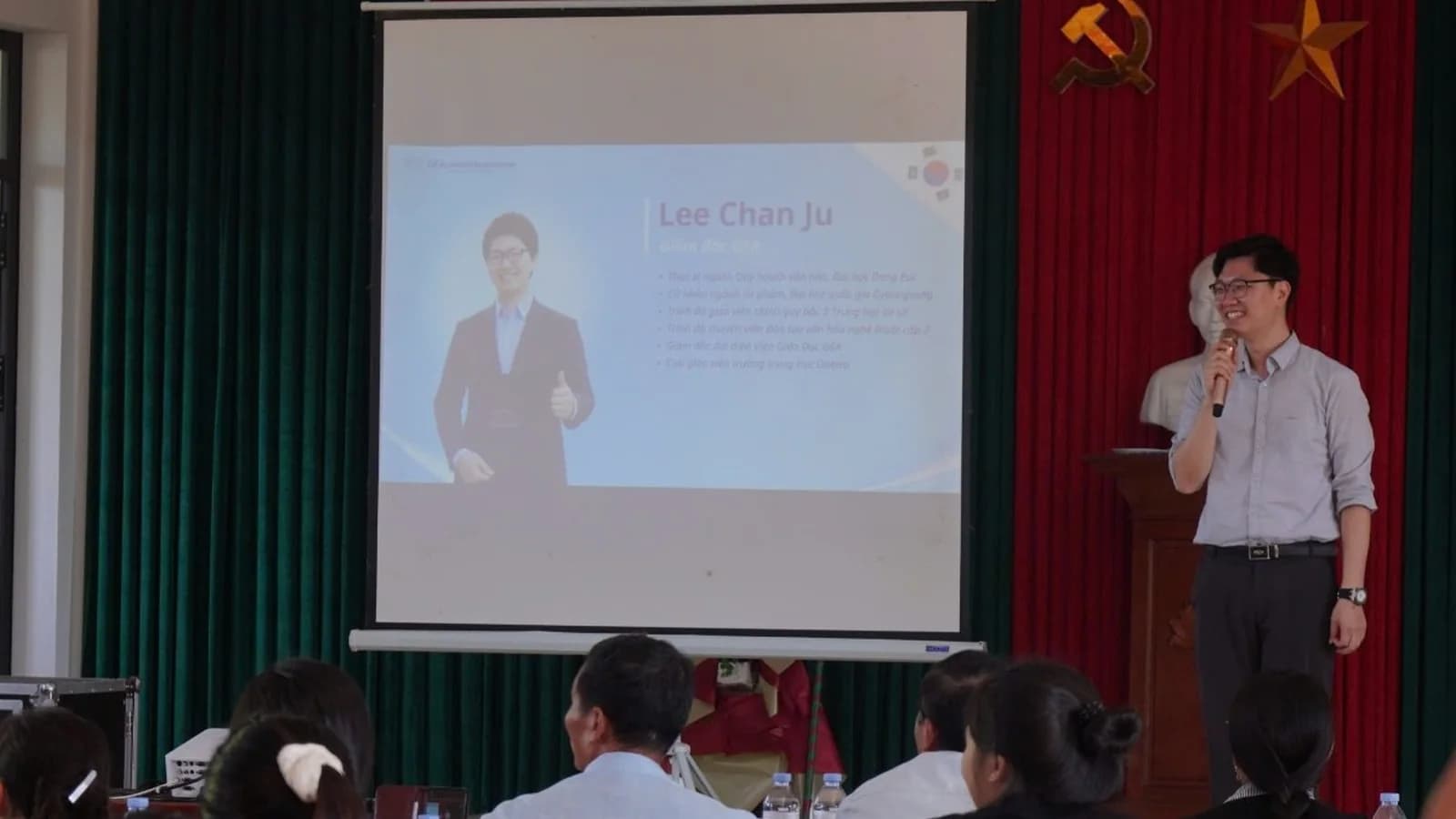
Công ty TNHH Hợp tác Quốc tế GEA, which operates the Du Học Hàn Quốc GEA brand under Director Lê Văn Tùng, held two Study in Korea seminars in Vietnam on June 13 and 14, 2026, for students who had recently taken their high school graduation examinations and their parents.
The first seminar took place at Nhà văn hóa thôn Cừa Thôn on June 13. The second was held at Hội trường UBMT Thôn Phú Vinh on June 14.
According to the organizer, the sessions addressed the main issues families consider when preparing to study in Korea, including study costs, eligibility, application documents, visa categories, university selection and daily life after arrival.
Institute Director Lê Thị Thu Hà explained the characteristics of studying in Korea, preparation and application procedures, visa arrangements, expected costs and matters students should consider before beginning life in Korea.
Participants were advised to review tuition, housing and living expenses together with the costs associated with documents and visa applications. Because actual expenses differ by institution, program, location and individual lifestyle, families were encouraged to assess each item rather than relying on a single general estimate.
Eligibility and document requirements may also vary according to the applicant’s educational background, intended program, Korean-language ability, financial circumstances and study plan. The seminars outlined the overall process from university application and admission through visa preparation, departure and adjustment after arrival.
The presentations explained the differences between the D-2 and D-4 visa categories. According to the Korean government’s Study in Korea portal, D-2 visas apply to degree programs at the associate level or above, while D-4 visas apply to non-degree training programs; D-4-1 covers Korean-language training. Specific eligibility and document requirements can vary by program and applicant.
Lê Thị Thu Hà said students should consider their academic goals, Korean proficiency, financial circumstances, preferred region and plans after graduation when selecting an institution.
The seminars also introduced the International Education Quality Assurance System, or IEQAS. Under the system, Korea’s Ministry of Justice and Ministry of Education assess universities in areas including international student recruitment, support, management and outcomes. Participants were advised to consider accreditation together with academic programs, admission requirements, housing and student-support services.
Lee Chan Ju, an executive officer of the Korean corporation GEA International Human Resources Development LLC, attended the seminars and introduced the student-support infrastructure available after arrival in Korea.
His presentation covered Korean-language education, academic and daily-life counseling, emergency interpretation and initial adjustment support. The seminars also explained how the organization in Vietnam and the Korean corporation coordinate when students encounter difficulties with study, communication or daily life.
Mai Thị Hòa, a local GEA agent with personal experience studying in Korea, shared practical guidance based on her own international student life.
She discussed pre-departure preparation, adjustment to classes and daily routines, communication challenges, time management and ways to seek assistance when problems arise. Her presentation was intended to help students and parents understand life after admission and visa issuance, rather than focusing only on documents and procedures.
During the question-and-answer sessions, parents asked about expected study costs, application documents, the differences between D-2 and D-4 visas, university selection and life after arrival.
Questions also focused on student safety, access to counseling and emergency interpretation, and how the Vietnamese and Korean organizations would cooperate when students encountered academic or daily-life difficulties.
Du Học Hàn Quốc GEA said the seminars were designed to explain the full Study in Korea process—from costs, eligibility and documents to visas, university selection and post-arrival life—rather than focusing only on university admission.
The Korean corporation GEA International Human Resources Development LLC says it provides Korean-language education and Study in Korea consulting for students from Vietnam, India, Bangladesh and other Asian countries.
It also operates lifelong education and Korean-language programs and provides emergency interpretation, academic and daily-life counseling and post-arrival adjustment support. The corporation says its fee-charging employment-placement business supports career preparation and lawful job matching within the limits of each student’s residence status and applicable regulations.
Editor’s note: K-Study Times is operated by the Korean corporation that participated in the events covered in this release. The text was prepared from information and photographs supplied by the organizer.
Related Articles
- Universities
- Universities
- Universities
- Universities
- Universities
- Universities