

Studying in Daegu: Kyungpook National University, Keimyung University and how to choose the city
A review of Daegu's foreign-resident living areas and future industries, and 2025 disclosed figures and international-student support at Kyungpook National University and Keimyung University.
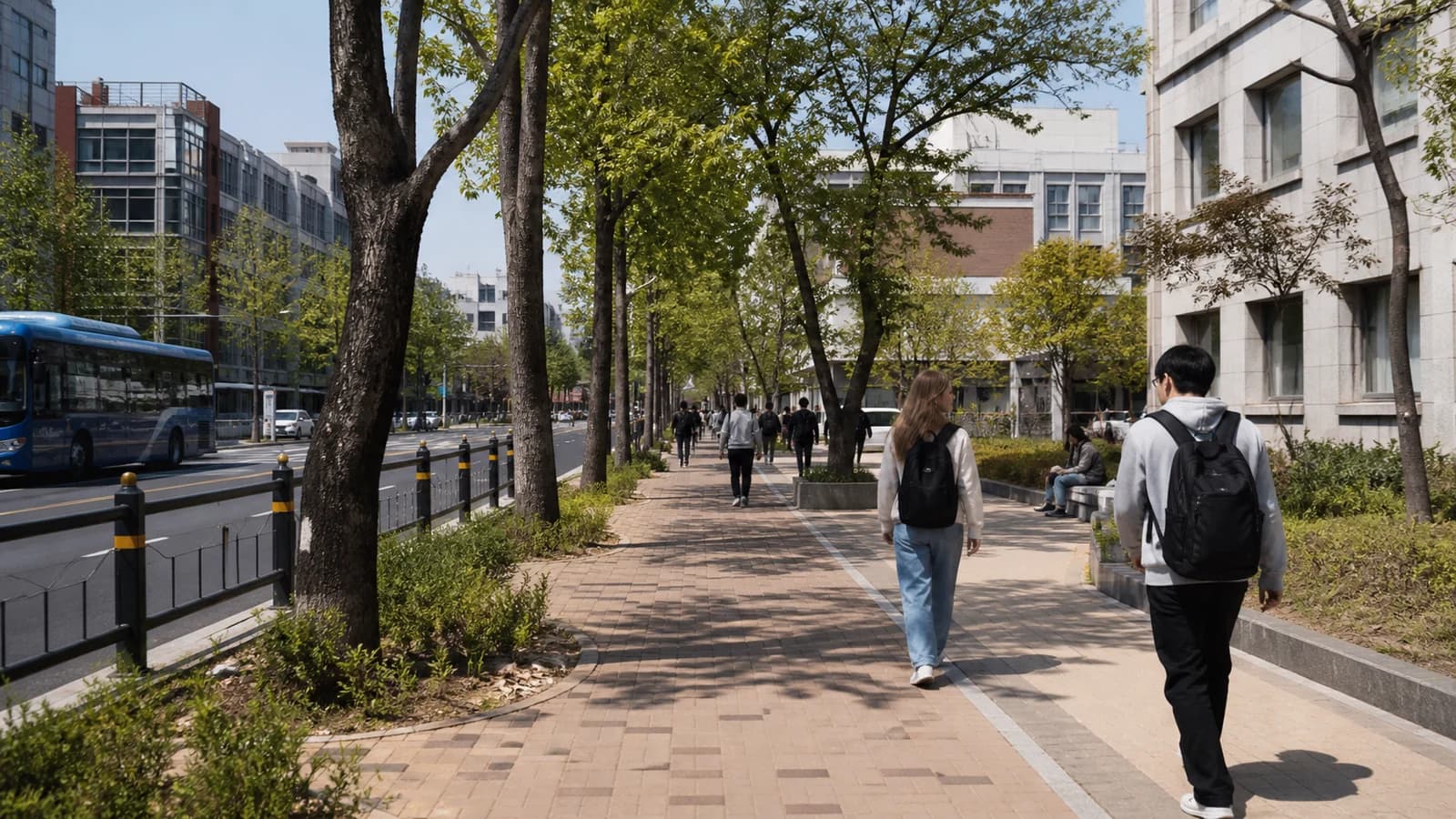
Key Points
- Two four-year universities in Daegu recruit international students: Kyungpook National University and Keimyung University.
- There are only two institutions, but they are large and located in distinct parts of the city.
Two four-year universities in Daegu recruit international students: Kyungpook National University and Keimyung University. There are only two institutions, but they are large and located in distinct parts of the city. On the same basis in the 2025 disclosures, they had 43,053 enrolled students and 4,704 international students. Kyungpook National University is in Buk District and Keimyung University's Seongseo Campus is in Dalseo District, so commuting areas and nearby living environments differ even within the same city.
Daegu is itself a metropolitan city with a base for international students' daily lives. The city reported 61,554 foreign residents in 2024, including 8,709 international students. Dalseo and Buk districts are among areas with large foreign-resident populations, and each university has a campus in one of these living areas.
Consider future industries and universities together
Daegu identifies future mobility, robotics, health care, semiconductors and ABB as five new industries. Students seeking engineering, natural science, medical or data fields can check not only department names but also how a university's research and industry-academic cooperation notices connect to these industries. Humanities, social science and arts students can likewise use Daegu's manufacturing, medical and cultural-service industries as a setting for field learning and career exploration.
Because the city is large, applicants should not assume that merely being located in Daegu makes commuting easy. Students not living in dormitories should check housing costs near each campus, subway and bus transfers, and travel home after evening classes separately.
Kyungpook National University and Keimyung University differ from the disclosed figures onward
| University | 2025 international students | Average annual tuition | Dormitory capacity rate | Characteristics to check |
|---|---|---|---|---|
| Kyungpook National University | 1,660 | KRW 4,514,200 | 23.7% | National comprehensive university, Buk District living area, international-office buddy program |
| Keimyung University | 3,044 | KRW 8,079,000 | 13.4% | Large international-student base, Seongseo Campus, Korean Language Institute and overseas Korean-language centers |
Tuition is the 2025 annual average for the whole university. The actual amount varies by major, year and scholarship application, so the tuition schedule for the intended admission term is final. Dormitory capacity also does not guarantee rooms to every international freshman; applicants should read the application period and selection criteria in the residence notice.
Kyungpook National University
Kyungpook National University is a national comprehensive university with colleges ranging from humanities, social sciences and natural sciences to engineering, medicine, veterinary medicine, pharmacy and arts. Its disclosed average annual tuition is lower than Keimyung University's at KRW 4,514,200, while its dormitory capacity rate is higher at 23.7%.
The international office ran the KNU Buddy Program in the first semester of 2026, linking international exchange students and domestic students. Activities included campus pickup, residence-hall move-in, course registration and campus-facility guidance, and an introduction to life in Daegu. Separate notices are needed to know whether the same arrangement applies to new degree students, but the program shows how the office handles initial settlement and student exchange.
Keimyung University
Keimyung University had 3,044 international students in the 2025 disclosures. The university said that, as of April 2026, it had about 4,100 foreign students including Korean-language trainees. Rather than mixing those two figures with different counting scopes, it is more accurate to distinguish degree, graduate and exchange students from Korean-language training.
Keimyung University's Korean Language Institute said 1,414 people from 33 countries participated in its regular 2026 program. The university also introduces internationalization programs, international-student support, and the operation of overseas King Sejong Institutes and Keimyung Korea Centers. Students planning to begin with Korean and continue into a degree program should separately check admission requirements, fees and credit recognition for each course.
The right university is decided by four factors
First is the major: check the recruitment unit you can actually enter within Kyungpook National University's broad national comprehensive-university system or Keimyung University's departments and internationalization programs. Second is cost: add tuition and scholarships to dormitory and meal costs for one semester. Third is the living area: calculate housing and commuting separately around the Buk and Dalseo district campuses. Fourth is language and settlement support: check international-office consultation languages, Korean courses, and the audience and application timing for buddy and orientation programs.
Use institution-wide figures as the starting point when comparing the two universities, then make the final decision with the international-admissions guide for the intended term, department curriculum and dormitory notice.
Related Articles
- Universities
- Universities
- Universities
- Universities
- Universities
- Universities
Comments
Please sign in to post a comment.
You will return to this article after sign-in.
Sign inNo comments yet.