Study Semiconductor Engineering in Korea: English Graduate Tracks and Scholarships
A data-based guide for international students considering semiconductor or electronics studies in Korea, covering memory-chip industry strength, English-taught graduate routes, scholarships and university selection.
Key Points
- Korea is a central country in memory semiconductors and HBM supply chains.
- The realistic route for foreign students is an English-taught graduate program or international undergraduate admission.
- KAIST EE and similar programs require official checks on English scores, labs and scholarship rules.
- Contract-department or job-guarantee claims should not be used unless an official foreigner track is confirmed.
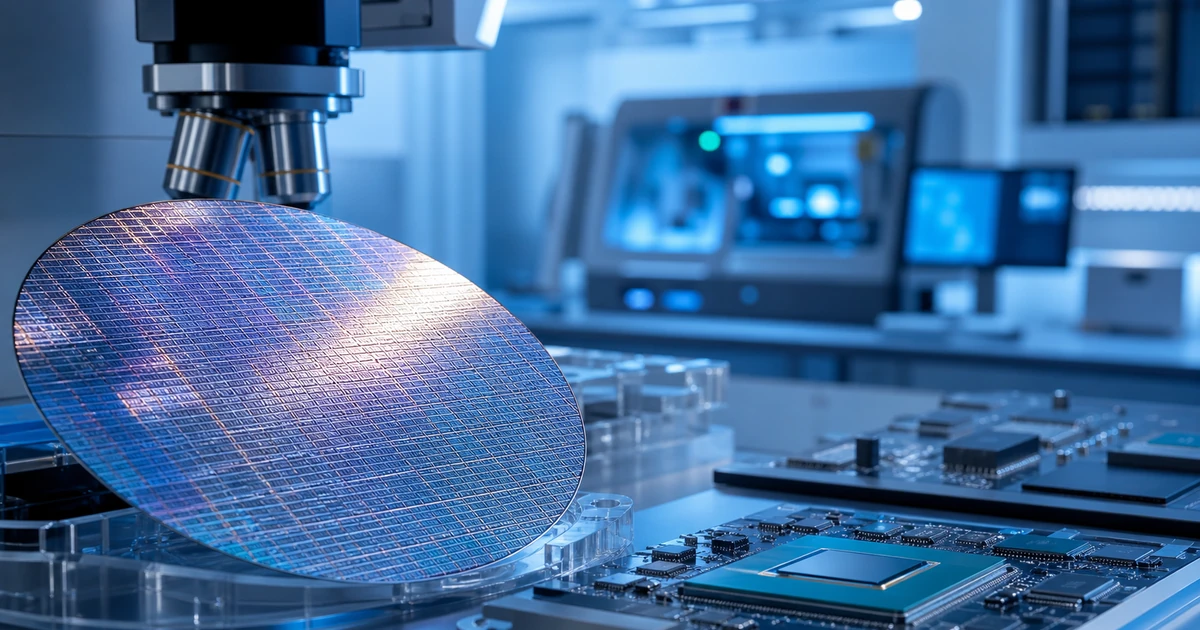
Studying semiconductors in Korea means more than simply choosing a popular major. Korea is a key player in the memory semiconductor and HBM supply chains, and an ecosystem encompassing research, production, equipment, and materials operates in tandem, centered around Samsung Electronics and SK Hynix. For international students pursuing careers in semiconductors or electrical engineering, Korea offers a unique opportunity where industrial practice and university research go hand in hand.
It is worth looking at verified industry indicators first. According to Invest Korea, South Korea’s global market share for memory semiconductors in 2022 stood at 60.5%, with 70.5% for DRAM and 52.6% for NAND flash. As demand for AI servers grows, the importance of High Bandwidth Memory (HBM) has also increased, and SK Hynix has been reported to be the leading company in the HBM market by 2025. These figures provide the basis for explaining studying semiconductors in Korea through industrial data.
However, the pathways directly accessible to international students must be considered separately. Contract programs with employment guarantees, which are intended for domestic students, should not be presented as admission pathways for international students. Currently, the confirmed, reliable pathways are the undergraduate admission tracks for international students in electrical engineering and semiconductor-related fields, as well as graduate programs taught in English. In particular, master’s and doctoral programs—which combine English-language instruction, lab-centered education, and on-campus scholarships—offer a realistic option for students from India and Southeast Asia.
A prime example is the Department of Electrical and Electronic Engineering at KAIST. The international graduate school admissions guide specifies English proficiency requirements of a TOEFL iBT score of 83 or an IELTS Academic score of 6.5, and outlines scholarship programs—such as KEPSI and EPSS—that cover tuition and living expenses. Applicants should not focus solely on the major name but should also review specific research labs (such as those specializing in semiconductor devices, circuits, processes, AI memory, and materials), supervising professors, and scholarship conditions.
Cost is another factor to consider. While tuition at Korean universities varies by major and institution, it is generally lower than that of engineering programs in the U.S. and the U.K. The Global Korean Scholarship (GKS) program through Study in Korea and university-specific scholarships are important avenues for reducing the burden of tuition and living expenses. In markets with high demand for scholarship searches, such as India, the primary consultation points are “Can I study in English?”, “Are scholarships available?”, and “When are the deadlines?”, rather than “Which university is the best?”
When selecting a university, it is important to consider both the engineering research infrastructure and industry ties at institutions such as Seoul National University’s School of Electrical and Computer Engineering, KAIST, POSTECH, Sungkyunkwan University, and Hanyang University. However, when referring to QS subject rankings, only the latest verified sources should be used. Currently, a figure that can be safely cited in articles is Seoul National University’s 28th-place ranking in Electrical and Electronic Engineering as reported by The Korea Times; it is best not to use specific subject rankings for KAIST until the official list is confirmed.
It is safest to begin preparing your application at least 6 to 9 months in advance. This is because you must prepare your English test scores, letters of recommendation, research proposal, and translated and notarized transcripts all at the same time. In particular, even within the same field of “semiconductors,” graduate programs are divided into specialized labs—such as circuit design, devices, processes, packaging, and AI memory—so the wording of your application should be tailored to your specific subfield.
Points for Applicants to Check
- Prioritize checking the research lab, whether courses are taught in English, scholarship requirements, and application deadlines over the major name. - Verify through the official admission guidelines whether terms like “contract programs” or “employment-linked programs” are actually offered under the special admission track for international students. - Compare requirements by university regarding TOEFL/IELTS scores, letters of recommendation, research proposals, and whether contacting a prospective advisor is necessary. - Since the selection timelines and required documents differ for GKS and on-campus scholarships, manage them using separate schedules.
FAQs
Study Semiconductor Engineering in Korea: English Graduate Tracks and Scholarships — What are the key takeaways?
1. Korea is a central country in memory semiconductors and HBM supply chains. 2. The realistic route for foreign students is an English-taught graduate program or international undergraduate admission. 3. KAIST EE and similar programs require official checks on English scores, labs and scholarship rules. 4. Contract-department or job-guarantee claims should not be used unless an official foreigner track is confirmed.
What is the analyst note?
For international applicants, the strongest counseling route is not a domestic contract-department promise but English-taught graduate admission plus scholarships. The industry data builds authority; conversion depends on matching labs, English scores and funding deadlines.
What are the sources of this article?
Invest Korea / Wikipedia, "한국 반도체 산업 점유율(메모리·DRAM·NAND)" (https://en.wikipedia.org/wiki/Semiconductor_industry_in_South_Korea) / The Korea Herald, "SK하이닉스 HBM 세계 1위" (https://www.koreaherald.com/article/10544988) / KAIST School of EE, "KAIST 전기및전자공학부 국제대학원(영어·장학)" (https://ee.kaist.ac.kr/en/admission-06/) / The Korea Times, "QS 세계대학 학과 평가(서울대 전기전자 28위)" (https://www.koreatimes.co.kr/southkorea/society/20260325/korean-universities-climb-in-engineering-arts-in-qs-subject-rankings) / Study in Korea, "한국 유학 비용·정부초청장학(GKS)" (https://www.studyinkorea.go.kr/)
What government statistics are relevant?
한양대학교 외국인 유학생 7,725명 (2025H2); 성균관대학교 외국인 유학생 4,104명 (2025H2); 서울대학교 외국인 유학생 2,148명 (2025H2); 인도 출신 한국 유학생 1,954명 (2025H2). 출처: 법무부 출입국정보화센터 유학생관리정보 (data.go.kr 3069982).
Related Articles
- Universities
- Universities
- Universities
- Universities
- Universities
- Universities
Comments
Please sign in to post a comment.
You will return to this article after sign-in.
Sign inNo comments yet.