

Study Automotive and EV Engineering in Korea: Hyundai, Batteries and Graduate Routes
A guide for international students considering automotive, EV, mechanical, electrical or battery engineering in Korea, covering industry context, university routes, scholarships and costs.
Key Points
- Hyundai Motor Group is a core anchor for Korea's automotive industry.
- The EV transition requires mechanical, electrical, battery and software skills.
- International students can apply through undergraduate admission or graduate programs.
- Major selection should be based on specific technology fields, not just the word automotive.
The automotive industry is rapidly shifting toward electric vehicles and software-defined vehicles. South Korea is a market where the ecosystems for finished vehicles, batteries, automotive electronics, and components operate in tandem, centered around the Hyundai Motor Group. For international students interested in studying automotive engineering, South Korea offers the opportunity to explore not only mechanical engineering but also electrical and electronic engineering, materials science, battery technology, and software.
Hyundai Motor Group has consistently been ranked among the top global automakers in terms of sales. This metric serves as a key industrial basis when discussing automotive studies in South Korea. However, it is important to distinguish between national production rankings and corporate group rankings, as they are different metrics. It is more accurate to focus the discussion on “Hyundai Motor Group’s global standing” and “South Korea’s research and production ecosystem.”
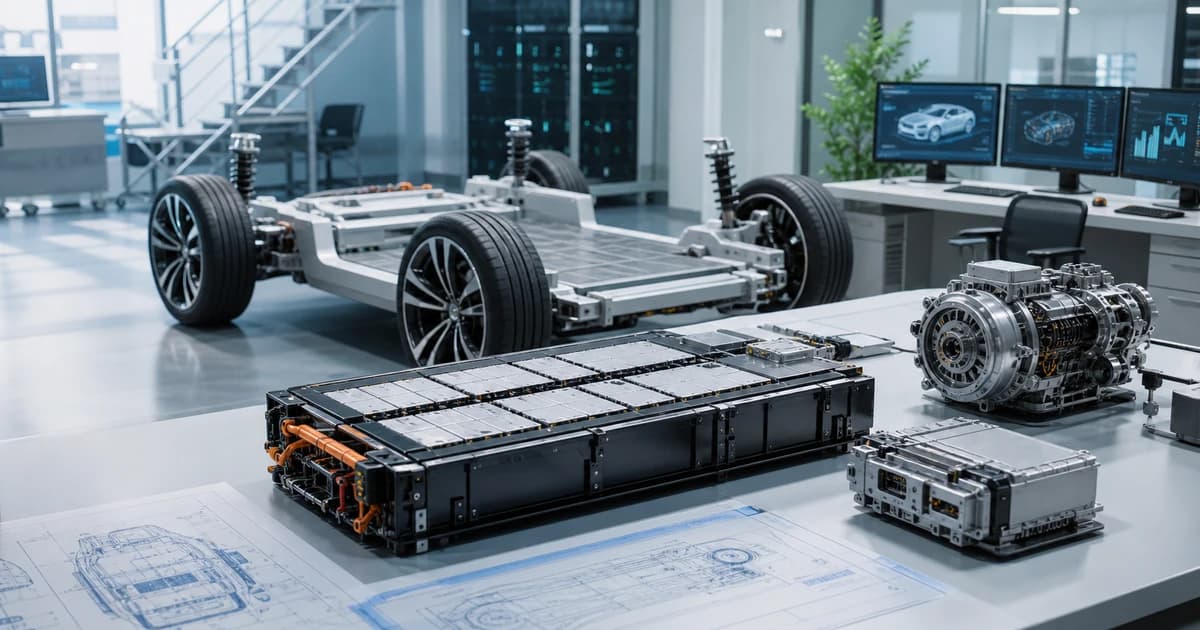
The shift to EVs has made choosing a major more complex. A mechanical engineering major focused solely on internal combustion engines is no longer sufficient; batteries, power electronics, motors, thermal management, autonomous driving sensors, and vehicle software have all become equally important. Even if a student is passionate about cars, their actual major may fall under one of the following: mechanical engineering, electrical engineering, materials engineering, or computer engineering.
Pathways for international students include undergraduate programs for international students and graduate programs. Universities with strong research foundations in mechanical, electrical, and materials engineering—such as KAIST, Seoul National University, and Hanyang University—are worth considering, and proximity to industrial clusters in Ulsan and Hwaseong is also a factor to consider. For graduate school, a good fit with the research lab and scholarship conditions are key.
One must be careful when discussing batteries. While Korean battery companies hold a strong position in markets outside of China, it is important to distinguish that China’s CATL is the global leader. Therefore, it is more accurate to describe Korea not as “the world’s number one in batteries,” but as “a country equipped with both a battery and an automotive electronics ecosystem for the EV transition.”
Cost and scholarships are important criteria when studying engineering abroad. The application deadlines and eligibility requirements for the Global Korean Scholarship (GKS), university-specific scholarships, and lab-provided support vary. For students like those from India who prioritize English-medium master’s programs and scholarship opportunities, it is essential to verify not only the admissions office’s guidelines but also whether the department or lab conducts classes in English and the specific funding conditions.
Automotive engineering can also be linked to career prospects in one’s home country. Hyundai, Kia, and their parts suppliers have production and sales networks in various markets, including India, Southeast Asia, the U.S., and Europe, and battery companies have also been expanding their overseas factories. When planning a career in your home country, you can highlight your understanding of the Korean automotive industry as a key strength.
In your application, you need to demonstrate more specific technical interests than simply stating that you “like cars.” You should narrow your focus to areas such as EV thermal management, battery materials, power electronics, vehicle control, production automation, or autonomous driving data to ensure a good fit with the lab and program. Only after this process is well-defined will your scholarship application and research proposal be persuasive.
Undergraduate applicants should verify their completion of foundational math and physics courses as well as laboratory courses, while graduate applicants should document their capstone projects, internships, and research experience. Since the automotive and EV sectors involve many team projects, English presentation and technical writing skills can also be advantageous during scholarship reviews.
Applicants must first determine which field they wish to pursue: mechanical engineering, electrical and electronic engineering, battery technology, or software. Corporate rankings, national production volumes, and battery market share are distinct metrics that should be evaluated separately. Graduate school applicants should review laboratory projects, scholarship requirements, and the environment for English-language papers and coursework. The potential for working at local factories in India and Southeast Asia should be evaluated separately from the job market in their home country.
Related Articles
- Universities
- Universities
- Universities
- Universities
- Universities
- Universities
Comments
Please sign in to post a comment.
You will return to this article after sign-in.
Sign inNo comments yet.