

Korea's Total Population Up 10,000; Foreign Residents Up 70,000 and International Students Up 36,000
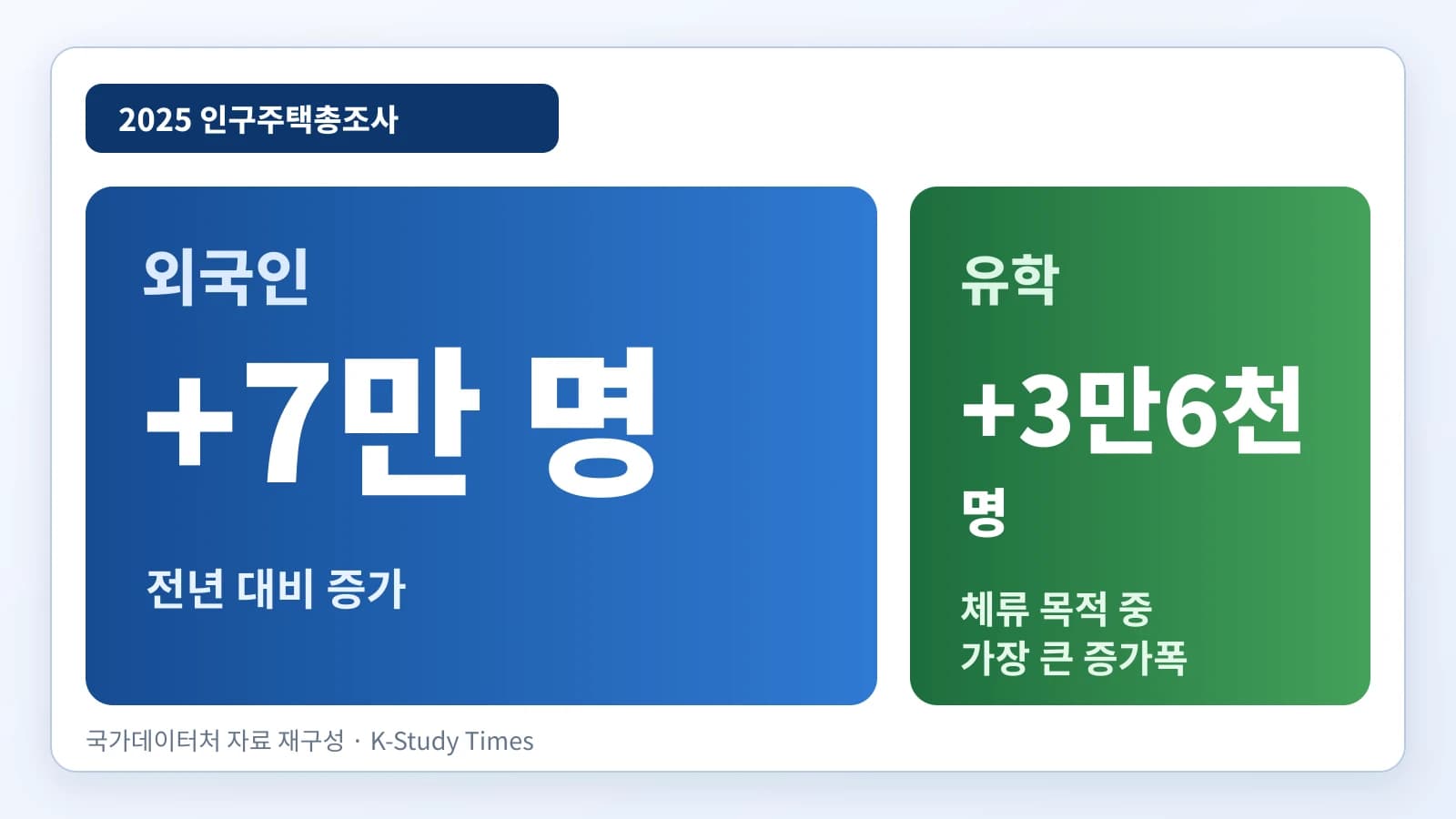
As of November 1, 2025, Korea's total population was 51.82 million, up by about 10,000. The Korean-national population fell by 50,000 while the foreign-resident population rose by 70,000; by purpose of stay, study recorded the largest increase, at 36,000.
Key Points
- Korea's total population rose by about 10,000 in 2025.
- The Korean-national population fell by 50,000, but the foreign-resident population increased by 70,000, more than offsetting that decline.
Korea's total population rose by about 10,000 in 2025. The Korean-national population fell by 50,000, but the foreign-resident population increased by 70,000, more than offsetting that decline. By purpose of stay, study recorded the largest increase among foreign residents, at 36,000.
Taken together, the National Data Agency's July 28 release of the '2025 Population and Housing Census Registered Census Results' and its December release last year of the '2025 Survey on the Status of Immigrants' Stay and Employment' show that the increase in international students is evident not only in university recruitment results but also in population and labor-market statistics.
Korean-National Population Down 50,000; Foreign-Resident Population Up 70,000
According to the National Data Agency announcement, Korea's total population was 51.82 million as of November 1, 2025. It rose by 0.02%, or about 10,000, from the previous year.
The Korean-national population was 49.71 million, down 50,000, while the foreign-resident population was 2.11 million, up 70,000. Foreign residents' share of the total population rose from 3.9% in 2024 to 4.1% in 2025. The National Data Agency said increases in international students, trainees, and seasonal workers contributed to the expansion of the foreign-resident population.
| Item | 2025 | Change from previous year |
|---|---|---|
| Korea's total population | 51.82 million | Up about 10,000 |
| Korean-national population | 49.71 million | Down about 50,000 |
| Foreign-resident population | 2.11 million | Up about 70,000 |
| Foreign residents' share of total population | 4.1% | Up 0.2 percentage points |
Study Recorded the Largest Increase by Purpose of Stay
In a briefing Q&A, the National Data Agency gave the number of foreign residents who increased by purpose of stay. Study increased the most, by about 36,000, followed by seasonal work at about 22,000 and employment under the Specific Activities status at about 18,000. These figures may not add up exactly to the total change in foreign residents, which was rounded to the nearest ten thousand.
By region, the foreign-resident population increased in every city and province except Jeju. The growth rate was highest in Gangwon, followed by South Jeolla and North Gyeongsang. Asked about the increase in Gangwon, the National Data Agency said regional universities and local governments' recruitment of international students had an effect.
89.3% of Foreign Residents Are of Working Age
Among foreign residents in 2025, people in their 30s were the largest age group, accounting for 27.2% of the total. The working-age population share for ages 15 to 64 was 89.3% among foreign residents, 20.9 percentage points higher than the 68.4% among Korean nationals.
In the same census, Korea's overall working-age population share fell to 69.2%, while the share of people aged 65 and older exceeded 20% for the first time, reaching 20.7%. The foreign-resident population had a younger age structure than the Korean-national population, but these figures alone cannot establish an effect on long-term settlement or the securing of labor.
International Students and Workers Both Increased in a Separate Survey
The 2025 Survey on the Status of Immigrants' Stay and Employment covers foreign residents aged 15 and older who had resided in Korea for at least 91 days as of May 15, 2025. In this survey, the foreign-resident population was 1.692 million, up 8.4%, or 132,000, from the previous year.
By status of stay, international students showed the largest increase, up 36,000. The Permanent Residence status rose by 21,000, while the Working Visit status fell by 10,000. Workers holding international-student status also increased by 23,000. The increase in workers under the Non-professional Employment status was 18,000.
Here, workers means people who were working at the time of the survey. It is not the same figure as the number of people who switched to an employment visa after graduation. Among foreign residents holding international-student status, the largest nationalities were Vietnam with 100,000, China with 45,000, and Uzbekistan with 17,000.
International-Student Statistics Should Also Be Read Alongside Post-Admission Trends
The two statistics show that growth in international students accounted for a substantial share even amid changes in the overall foreign-resident population and the number of workers.
However, these data alone do not show in which regions, or in what numbers, international students settled, or how many moved into jobs connected to their field of study after graduation. Assessing international-student policies of regions and universities requires following enrollment numbers together with continued study, graduation, employment, and changes of status of stay.
Data and Method
The Population and Housing Census includes foreign residents of all ages as of November 1, 2025. The Survey on the Status of Immigrants' Stay and Employment covers foreign residents aged 15 and older who had resided for at least 91 days as of May 15 of the same year. The respective increases of 36,000 reported in the two surveys were not added together because their reference dates and survey populations differ.
Related Articles
- Policy
- Policy
- Policy
- Policy
- Policy
- Policy
Comments
Please sign in to post a comment.
You will return to this article after sign-in.
Sign inNo comments yet.