

Study in Korea Work in Korea: what international students should check before planning employment
Based on Study in Korea's employment system page, this guide explains D-2, D-10, E-7, part-time work and career planning for international students.
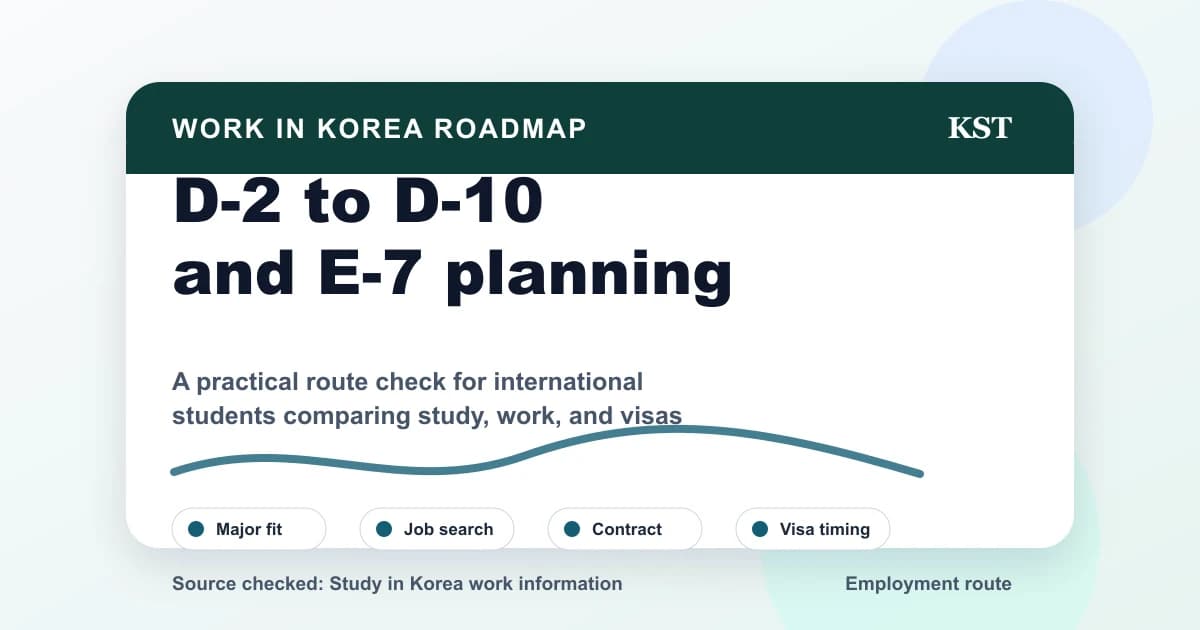
Key Points
- Students often ask whether they can work in Korea after graduation.
- The official Study in Korea Work in Korea page separates study status, job-search status, employment status and part-time work.
Students often ask whether they can work in Korea after graduation. The official Study in Korea Work in Korea page separates study status, job-search status, employment status and part-time work. That structure matters.
Core Answer
A D-2 student route does not automatically become employment. Students may later review D-10 job-search status or E-1 to E-7 employment status, but E-7 requires occupation, employer contract and wage-related conditions.
| Stage | Check | Counseling question |
|---|---|---|
| While studying | Major, grades, projects | Does the portfolio match the target job? |
| Before graduation | D-10 or status change | Does visa timing match graduation? |
| Hiring | Contract and occupation | Is the job linked to an E-7 occupation? |
| After hiring | Status maintenance | Does a job change require action? |
Why D-10 And E-7 Are Different
D-10 is a job-search or preparation route. E-7 is an employment status for specified professional activities. Students should plan backward from target occupation.
FAQs
Can every D-2 student change to E-7?
No. The occupation, background, contract and wage criteria must be checked.
Is D-10 an employment visa?
It is mainly a job-search route, not the final employment status.
Is part-time work enough for career planning?
No. Professional employment also needs major evidence, projects and language readiness.
What should I prepare before counseling?
Prepare courses, projects, language scores, graduation timing and target job type.
Related Articles
- Visa
- Visa
- Visa
- Visa
- Visa
- Visa
Comments
Please sign in to post a comment.
You will return to this article after sign-in.
Sign inNo comments yet.