

Advanced-industry specialization university students tackle challenges from Samsung Electronics, SK hynix and others
The Ministry of Education announced the 2026 STOB League briefing, company challenge fields, participation format and schedule from July 15 to October 2.
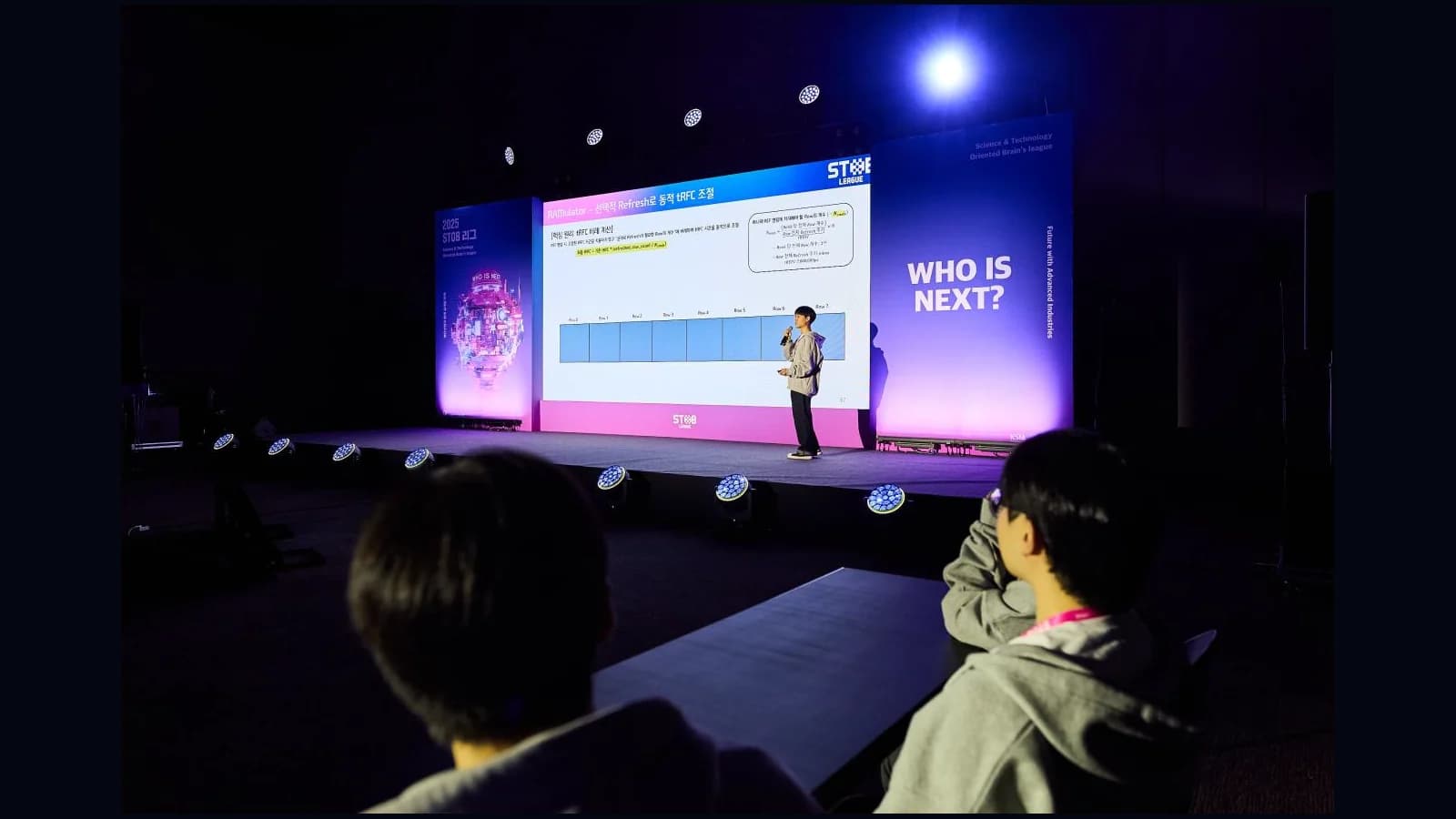
The Ministry of Education (Minister Choi Kyo-jin) will hold an online briefing on Tuesday, July 21, for the “2026 Advanced Industry Specialization University Competition (STOB League, Science&Technology Oriented Brain’s League).”
Competition briefing and expansion of fields
The briefing was arranged to encourage student participation in the “Advanced Industry Specialization University Competition” and increase understanding of it. Through competition and collaboration among students, the event asks participants to solve real problems from advanced-industry workplaces as research projects.
The competition began in the semiconductor field in 2024, expanded to the secondary-battery field last year, and adds a biotechnology field this year. It presents open-ended problems that students can study and propose ways to improve, while excluding problems whose outcomes could vary according to each university’s infrastructure.
Company challenge fields and team composition
In the semiconductor field, Samsung Electronics and SK hynix will present challenges in detailed areas including design, devices and processes, and materials, parts and equipment. In secondary batteries, LG Energy Solution will present challenges in materials and parts and in manufacturing and processes. In biotechnology, SK Biopharmaceuticals will present workplace challenges in candidate substances, manufacturing processes, and quality assurance and quality control (QA/QC). Experts from the participating companies that set the challenges will also take part in evaluating the results.
Students from Advanced Industry Specialization Universities who wish to participate may form teams of two to four people, including joint teams with students from other specialization universities. A single-university team will work on its research project with one faculty adviser, while a joint team will work with two faculty advisers.
Preliminary and final schedules and awards
The preliminary round will evaluate the appropriateness, feasibility, qualitative excellence and completeness of the proposed solution direction and problem-solving ideas. Teams with strong preliminary results will advance to the final round held in connection with the “2026 Industry-Academia-Research Cooperation EXPO” from Wednesday, September 30, through Friday, October 2, where they will present their research projects and answer in-depth questions from the judges.
※ Schedule: challenge release (7.15.) → online briefing (7.21.) → team operation plan submission (7.24.) → team result report submission (8.28.) → preliminary evaluation (second week of September) → final evaluation and awards ceremony (9.30.–10.2.)
The grand-prize and top-excellence teams selected through evaluation will receive the Minister of Education Award and prize money of KRW 5 million and KRW 4 million, respectively. Excellence-award teams will receive the President of the Korea Institute for Advancement of Technology Award and KRW 3 million, while encouragement-award teams will receive an award from the relevant industry association president and an additional prize.
Evaluation of last year’s competition and the ministry’s position
Last year’s competition drew a strong response, with 170 teams from 29 universities in the semiconductor field and 16 teams from five universities in the secondary-battery field. One participating student said, “It was difficult to solve at the undergraduate level, but problems without a single answer allowed us to think and learn more.” A faculty adviser said, “High-quality problems containing challenges from industrial workplaces helped us organize a curriculum based on industry demand.” A company expert who participated in setting and evaluating the challenges also said, “Although the burden of day-to-day work makes it difficult to consider these matters at industrial workplaces, it was good to hear students’ fresh ideas about issues that need solutions,” reflecting positive evaluations from students, faculty and companies alike.
Lee Yun-hong, Director-General of the Ministry of Education’s Artificial Intelligence Talent Support Bureau, said, “This competition is a meaningful opportunity for undergraduates with capabilities in advanced fields to develop ideas concerning difficulties faced by Korean companies.” He added, “We hope for strong interest and participation from students at Advanced Industry Specialization Universities in semiconductors, secondary batteries, biotechnology and other fields.”
Related Articles
- Policy
- Policy
- Policy
- Policy
- Policy
- Policy