

Studying in Daejeon, a city of research complexes, expos and transport: 15 recruiting universities
This introduces Daejeon's urban context, formed by Daedeok Research and Development Special Zone and the 1993 Daejeon Expo, and sets out 15 institutions recruiting international students and the city's support contacts.
Key Points
- Daejeon is not simply a city where universities are concentrated.
- It is a key research-and-development city with the Daedeok Research and Development Special Zone, and the 1993 Daejeon Expo played an important role in establishing it as a science city.
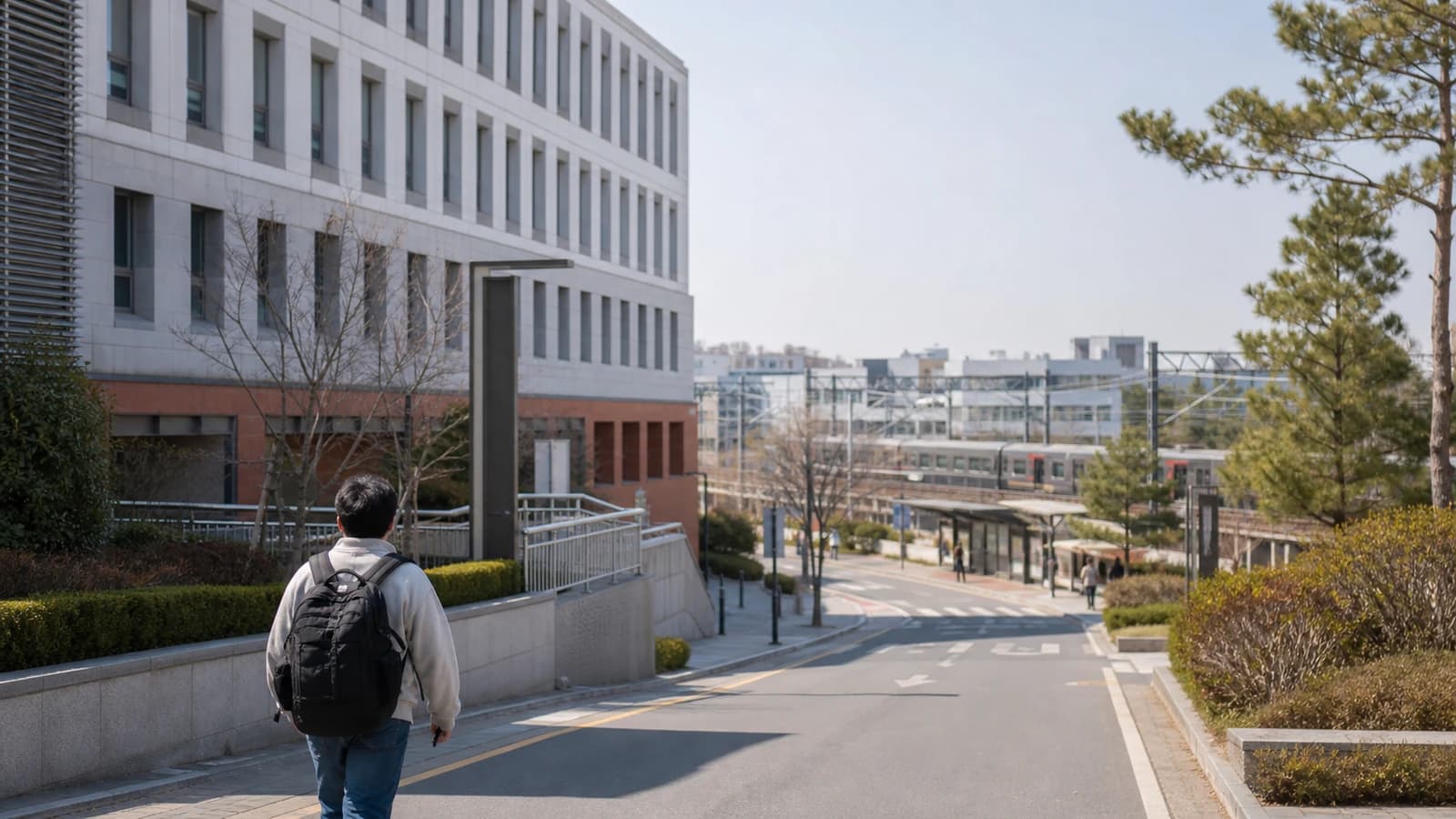
Daejeon is not simply a city where universities are concentrated. It is a key research-and-development city with the Daedeok Research and Development Special Zone, and the 1993 Daejeon Expo played an important role in establishing it as a science city. Daejeon describes itself as a hub city with a metropolitan transport network of railways, expressways and national highways. For international students, Daejeon is both a place to attend classes and a living area for encountering research institutions and science-culture facilities and travelling to other cities.
When preparing to study in Daejeon, it is quicker to check this character of the city alongside institution-specific admissions material rather than choosing a university name first. The GEA registry of institutions recruiting international students, fixed on August 10, 2026, lists 15 institutions in Daejeon: 11 four-year universities and four junior colleges.
What to check in Daejeon, a research and science city
Daejeon Science Tour provides information on visits to Daedeok research-complex institutes, meetings with researchers, and science experiences and camps. Eligibility differs by program, but it is an urban resource worth examining together with university admissions information for students interested in science and engineering majors or research and science culture.
Transport is also essential when considering Daejeon as a study destination. The city describes itself as a metropolitan transport hub with railways, expressways and national highways, and presents the geographic advantage where the Gyeongbu and Honam railway lines intersect as a basis for growth as a rail-transport center. When comparing campuses and dormitories, check not only the institution address but also station and bus transfers and travel time to other regions.
Six things to consider when choosing the area
Choosing an area from a university name alone creates many things to check again after admission. In Daejeon, it is realistic to compare the following six items at once when choosing an institution.
| Item to check | Material to check in Daejeon |
|---|---|
| Major and language of instruction | International-admissions recruitment units and Korean- and English-course guidance by institution |
| Research and field experience | University research-institute and industry-academic cooperation notices, and Daejeon Science Tour eligibility |
| Tuition and living costs | A budget table separating annual tuition, dormitory fees, meals and transport |
| Housing and travel | Campus and dormitory addresses, station and bus transfers, commuting time |
| Language and living support | University international offices, Korean-language education centers, and the Daejeon Integrated Support Center for Foreign Residents |
| Plan after graduation | Department guidance on practice, field links and careers, and current residence-procedure notices |
Even within Daejeon, campuses differ in location, major, language of instruction and dormitory operation. Checking the six items in the same order makes it easier to narrow institutions that fit an applicant's goals. Ask the university international office directly about anything not in the admissions guide.
What Daejeon City does
The work of Daejeon City's Bureau of Education Policy and Strategy includes support for attracting international students and operation of the Daejeon RISE Center. The city does not recruit for universities; rather, it operates policy and support contacts involving regional universities, research institutions and businesses.
The RISE project introduced by Daejeon City includes tasks to cultivate regional talent and support the recruitment and settlement of international students through cooperation among universities, research institutions and businesses. Participating institutions and eligible students can vary by notice, so check both the international office of an institution of interest and the project notice.
Where to go when counseling is needed
The Daejeon Integrated Support Center for Foreign Residents provides information on counseling and Korean-language and exchange programs for foreign residents. International students may use some programs, but the center does not replace university admissions screening or approval of residence status. Check the center's notices for opening hours and available counseling languages before visiting.
| What to confirm first | Contact point | Material to check |
|---|---|---|
| Whether it is an eligible institution | GEA and University Alimi | Institution name, campus and university type |
| Recruitment units and eligibility | University international office and admissions office | Latest international-admissions guide |
| Regional support programs | Daejeon City and Daejeon RISE | Program notices, eligible applicants and periods |
| Living counseling | Integrated Support Center for Foreign Residents | Opening hours, counseling languages and reservation method |
The 15 institutions are divided in the following articles
Daejeon's 11 four-year universities include Chungnam National University, Hanbat National University, Daejeon University, Mokwon University, Pai Chai University, Woosong University and Hannam University. Its four junior colleges are Daedeok University, Daejeon Institute of Science and Technology, Daejeon Health Institute of Technology and Woosong College. The following two articles compare international-student counts and tuition and dormitory figures by institution separately using 2025 disclosures.
The first step in preparing an application is not to mix city support with a university admissions guide. The city and the center provide living and settlement information, while universities state admissions, department, tuition and dormitory conditions. Checking both materials on the same date makes clear what must be confirmed before applying.
Related Articles
- Korea Life
- Korea Life
- Korea Life
- Korea Life
- Korea Life
- Korea Life
Comments
Please sign in to post a comment.
You will return to this article after sign-in.
Sign inNo comments yet.