

Free Flu Shots for Foreigners in Korea: Only Pregnant Students Aged 15–64 Qualify — 2026–2027 Rules, Paid Shots and What to Bring
Flu shots for foreigners in Korea follow the same rules as for Korean citizens. In 2026–2027, free shots cover ages 6 months–14, pregnant women and 65+, so students aged 15–64 pay unless pregnant. Alien registration card rules, stays under 3 months, clinics, prices and aftercare.
Key Points
- Is the flu shot free for foreigners in Korea?
- Under the 2026–2027 season National Immunization Program for influenza, free vaccination covers three groups: children aged 6 months to 14 years, pregnant women, and people aged 65 or older.
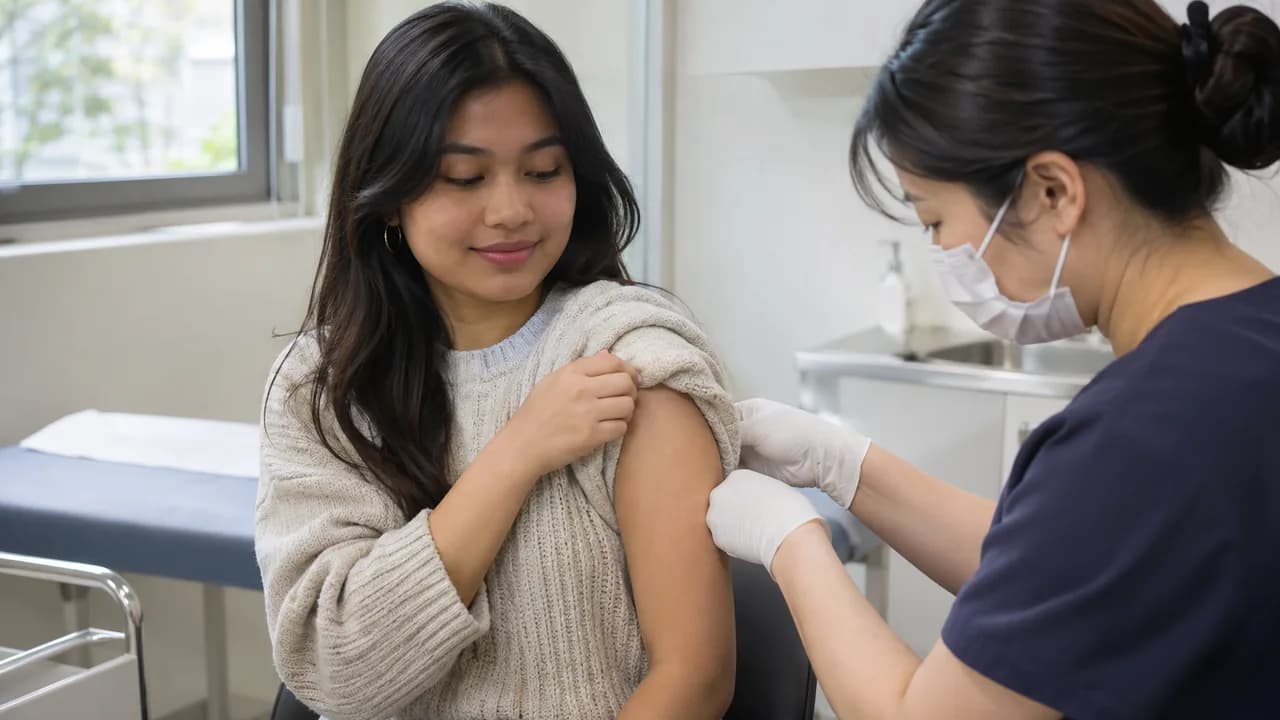
Is the flu shot free for foreigners in Korea? Under the 2026–2027 season National Immunization Program for influenza, free vaccination covers three groups: children aged 6 months to 14 years, pregnant women, and people aged 65 or older. Foreign nationals with an alien registration card are subject to the same criteria as Korean citizens. Being a foreigner does not by itself make anyone eligible for a free shot. As a result, most international students, who are between 15 and 64, are not eligible for a free flu vaccine unless they are pregnant, and they pay for the shot at a medical institution. Vaccination continues through April 30, 2027.
This year the flu season started early, and the vaccination schedule was moved up as well. Below, we walk through who gets a free shot, which criteria apply to foreigners, where and how to get vaccinated if you are not eligible, what to bring, and what to watch for after the shot.
Flu Season Came Early This Year: Vaccinations Began September 21
The Korea Disease Control and Prevention Agency (KDCA) issued an influenza epidemic advisory on September 11. In response to the early outbreak, it moved up the National Immunization Program schedule on September 16. Vaccination for children who need only one dose was brought forward by a week, to September 21 from the originally planned September 28. Pregnant women and children who need two doses started on September 21 as originally planned. As a result, all children and pregnant women began getting vaccinated together from September 21.
For people aged 65 or older, start dates were also moved up by a few days from the original plan and staggered by age. Those 75 or older began on October 6, those aged 70–74 on October 12, and those aged 65–69 on October 15. The vaccination period for all groups runs through April 30, 2027.
The first notices and posters released in August still show the old, pre-change schedules for children needing one dose and for people 65 or older. If you see different dates online, go by the revised schedule above.
Three Groups Get Free Shots; Among Students Aged 15–64, Only Pregnant Women
The groups eligible for free vaccination this season are shown in the table below. Starting this season, eligibility for children has been expanded to age 14.
| Group | Criteria | Vaccination starts | Vaccination ends | Verification documents |
|---|---|---|---|---|
| Children | Aged 6 months to 14 years (born Jan. 1, 2012–Aug. 31, 2026) | Sept. 21, 2026 | Apr. 30, 2027 | Resident registration certificate, National Health Insurance card, etc. |
| Pregnant women | Anyone with a confirmed pregnancy (regardless of gestational week) | Sept. 21, 2026 | Apr. 30, 2027 | Maternal health handbook, pregnancy confirmation, etc. |
| 75 or older | Those 75 or older among people 65 or older (born on or before Dec. 31, 1961) | Oct. 6, 2026 | Apr. 30, 2027 | ID |
| Aged 70–74 | Those aged 70–74 among people 65 or older (born on or before Dec. 31, 1961) | Oct. 12, 2026 | Apr. 30, 2027 | ID |
| Aged 65–69 | Those aged 65–69 among people 65 or older (born on or before Dec. 31, 1961) | Oct. 15, 2026 | Apr. 30, 2027 | ID |
| Aged 15–64 (excluding pregnant women) | Not eligible for free government vaccination | N/A | N/A | N/A |
The vaccine is a trivalent vaccine containing all strains recommended by the World Health Organization (WHO). Pregnant women and older adults get one dose every year, regardless of whether they were vaccinated in previous seasons. In other words, even if you got a shot last year, you need to get one again this year. Pregnant women and older adults receive a single 0.5 mL dose of inactivated trivalent vaccine.
Eligibility for those 65 or older is determined by year of birth. If you were born on or before December 31, 1961, you are eligible. Start dates within the 65-and-older group differed by age bracket, but all three age brackets are now within the vaccination period.
The number of doses for children may vary. Children aged 6 months to under 9 years who are being vaccinated for the first time or whose vaccination history is unknown, or who had received only one dose in total by June 30, 2026, are covered for two doses.
Most degree-seeking international students and Korean language trainees fall within the 15–64 age range. In the table, people in this age range can fall only under the pregnant women row. In effect, the only way international students themselves can get a free shot is if they are pregnant.
Criteria for Foreigners: Alien Registration Card or Temporary Management Number; Stays Under 3 Months Excluded
KDCA's 2026 National Immunization Program guidelines (revised October 2) include criteria for foreigners. Foreigners get vaccinated at public health centers or designated medical institutions with an alien registration card or a temporary management number, exactly as Korean citizens do. People exempt from alien registration are treated the same as holders of an alien registration number.
Long-term residents staying 3 months or longer have an option even without an alien registration number. They can first obtain a temporary management number at a public health center and then get vaccinated. By contrast, short-term visitors staying less than 3 months are not eligible for support. People in Korea briefly for short-term training cannot receive government support even if they are pregnant women or children.
One point here is easy to misunderstand. "Same as Korean citizens" means foreigners follow the same eligibility criteria. You must meet criteria such as age or pregnancy to get a free shot. Having an alien registration card alone does not make the shot free.
These guidelines set common criteria for the entire National Immunization Program. The guidelines state that details of the 2026–27 season influenza program will be announced separately through an official notice before the program begins. So it is safer to check once with your local public health center or the KDCA call center (1339) before getting vaccinated.
If You Are a Pregnant Student or Living With Children
Pregnant international students are eligible for free vaccination if they have an alien registration card or a temporary management number. Short-term visitors staying less than 3 months are excluded even if pregnant. Once a pregnancy is confirmed, you can get the shot regardless of gestational week. Simply show documents such as a maternal health handbook or pregnancy confirmation. The vaccination period runs from September 21, 2026, to April 30, 2027.
International student families raising children in Korea also have things to take care of. Children aged 6 months to 14 years are eligible for free vaccination under the same criteria. If your child is under 9 and is being vaccinated for the first time or has an unknown vaccination history, two doses may be needed. A child with no vaccination record from your home country may fall into this category. Children's eligibility is verified with documents such as a resident registration certificate or National Health Insurance card.
Document requirements for foreign children may vary by region. In its guidance on the National Immunization Program for children, the Guro-gu Public Health Center in Seoul asks families to bring the guardian's ID and the child's vaccination booklet, and tells foreigners to prepare a certificate of alien registration. Asking in advance which documents your child's vaccination site accepts can save you a wasted trip.
If You Are Not Eligible: Paid Vaccination and How to Check Prices
You can still get vaccinated even if you are not eligible for government support. Simply pay for a shot at a nearby medical institution that offers influenza vaccination. Vaccine availability varies by institution, so confirm that vaccination is available before you go.
You can compare prices in advance. On September 3, 2026, the Ministry of Health and Welfare and the Health Insurance Review and Assessment Service (HIRA) released prices for 753 items not covered by National Health Insurance at 74,449 medical institutions nationwide. They can be viewed on the HIRA website and the Health e-Eum app. Vaccination fees are among the disclosed items. The vaccination fee section now also links directly to KDCA's Vaccination Helper website.
However, HIRA's press release does not list nationwide minimum and maximum prices for flu shots. Look up prices at nearby institutions yourself on the HIRA website or Health e-Eum. The influenza "rapid antigen test" prices in the same press release are fees for a test to check whether you have the flu. They are not vaccination fees, so do not confuse the two.
Some local governments provide separate support for flu shot costs. For example, Busan City offers free vaccination to Busan residents aged 15–64 registered under the resident registration system who are recipients of medical/livelihood benefits, persons with severe disabilities and others. Busan's Dong-gu district offers free vaccination to Dong-gu residents aged 15–64 who have donated blood within the past year. Both programs require resident registration. The notices do not say whether international students qualify, so ask the public health center where you live directly.
In short, international students who are not eligible for a free shot can follow three steps. First, ask the public health center in your area whether it has its own support program. If not, compare vaccination fees at nearby medical institutions on the HIRA website or Health e-Eum. Finally, call the institution you chose to confirm it still has vaccine in stock, then visit.
Finding a Vaccination Site and What to Bring
If you are eligible for free vaccination, you can get the shot anywhere in the country regardless of your registered address. Just choose a nearby designated medical institution or public health center. There are about 23,000 designated medical institutions.
Here is how to find one:
- Go to the Vaccination Helper website (nip.kdca.go.kr).
- In the "Vaccination Management" menu, click "Find Contracted Medical Institutions" (or "Find Designated Medical Institutions").
- Select your region and find a nearby institution.
- Call before visiting to confirm that vaccination is available.
The menu names are worded slightly differently depending on the notice. Your local public health center can also point you to designated medical institutions. If you want to get vaccinated at a public health center, first check whether that center administers vaccinations itself.
What to bring depends on your group:
- Everyone: ID. You must bring it so your eligibility can be verified in advance.
- Foreigners: Alien registration card.
- Those staying 3 months or longer who do not yet have an alien registration number: Go to a public health center in person with your passport and a printed visa issuance confirmation to obtain a temporary management number first. It cannot be issued over the phone. Bring your passport when you go for the shot as well.
- Pregnant women: Maternal health handbook or pregnancy confirmation.
- Children: National Health Insurance card, resident registration certificate, etc. Foreign children are verified with their alien registration card, and some places, such as Guro-gu, require a certificate of alien registration. Children without an alien registration number should first obtain a temporary management number at a public health center with a passport (the guardian's passport, etc., if the child does not have one). Ask the institution in advance about required documents.
- Paid vaccination: Call ahead to check the price and whether the vaccine is in stock.
If you have not yet received your alien registration card, see the alien registration card guide for international students.
When to Get Vaccinated: Timing and Precautions After the Shot
Protective antibodies take about two weeks to form after vaccination. This year, an epidemic advisory was already issued in September. If you have not been vaccinated yet, it is better not to put it off. If you have final exams or plans to fly home over winter break, count back two weeks to set your date.
After the shot, follow these steps:
- Stay at the vaccination site for 20–30 minutes to watch for adverse reactions before going home.
- Get plenty of rest once you are home.
- The most common adverse reactions are redness or pain at the injection site. Most go away within 1–2 days.
- You can get it on the same day as a COVID-19 vaccine, but in a different part of the body.
Pre-Vaccination Checklist
- I checked whether I am eligible for a free shot based on my age and whether I am pregnant.
- I checked whether I am staying in Korea for 3 months or longer and whether I have an alien registration card or temporary management number.
- If I am not eligible, I compared prices on the HIRA website or Health e-Eum.
- I asked the public health center whether my area has its own support program.
- I called the vaccination site to confirm it has vaccine.
- I packed my alien registration card (or, if I do not have one yet, my passport and the temporary management number from the public health center), and, if pregnant, my maternal health handbook or pregnancy confirmation.
- I set a date to get vaccinated at least two weeks before exams or my trip home.
If you are worried about medical costs, also see National Health Insurance enrollment for international students and the risks of unpaid premiums and living cost budgets for international students in Seoul and other regions.
--- Free eligibility and schedules are based on a KDCA press release (September 16, 2026) and Vaccination Helper guidance; criteria for foreigners on KDCA's 2026 National Immunization Program guidelines (revised October 2, 2026); and price disclosures on a HIRA press release (September 3, 2026).
Related Articles
- Korea Life
- Korea Life
- Korea Life
- Korea Life
- Korea Life
- Korea Life
Comments
Please sign in to post a comment.
You will return to this article after sign-in.
Sign inNo comments yet.