

International student driving license in Korea: IDP valid up to 1 year from entry, plus how to exchange a home license or earn one from scratch, and costs
International students can drive in Korea on an IDP from a Geneva or Vienna Convention country for up to 1 year from entry (within its validity), exchange a home license after alien registration (in principle for Class 2 ordinary), or earn one from about $64 (KRW 86,000) in fees.
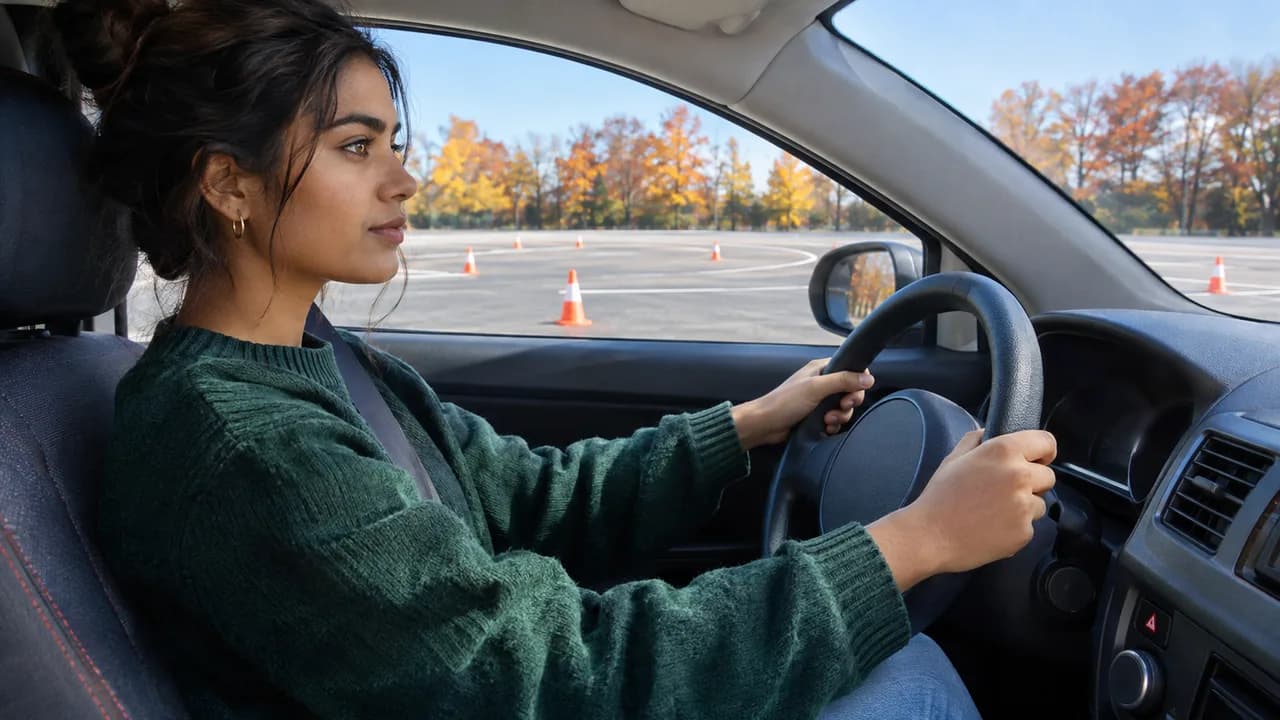
Key Points
- International students who want to drive in Korea have three options.
- With an International Driving Permit (IDP) issued by a Geneva or Vienna Convention country, you can drive for up to 1 year from your date of entry.
International students who want to drive in Korea have three options. With an International Driving Permit (IDP) issued by a Geneva or Vienna Convention country, you can drive for up to 1 year from your date of entry. If the IDP itself expires first, you can drive only until that date. If you hold a license from your home country, you can exchange it for a Korean license at a driver's license examination office after completing alien registration. In principle, the license issued in an exchange is a Class 2 ordinary license. Earning a Class 2 ordinary license from scratch in Korea costs about $64 (KRW 86,000) in fees paid to the Korea Road Traffic Authority if you pass every test on the first attempt.
This article lays out the conditions, documents, test steps and costs for each option, based on guidance from the Korea Road Traffic Authority, a Korean National Police Agency notice (April 6, 2026) and the Ministry of Government Legislation's Easy Law practical legal information service (as of October 15, 2026). Amounts are given in U.S. dollars first, with Korean won in parentheses (Hana Bank base exchange rate on November 3, 2026: $1 = KRW 1,341.10).
The three options at a glance
| Option | Basic requirements | What you can drive | Authority fees paid in Korea |
|---|---|---|---|
| International Driving Permit | Issued before departure by the country that issued your license; must be issued by a Geneva or Vienna Convention country | 1 year from entry (within the permit's validity); vehicle types listed on the permit | None (issued in the issuing country) |
| Home license exchange | Alien registration; a valid full license (obtained while staying more than 90 days in the issuing country) | In principle, Korean Class 2 ordinary | About $12.7–20.1 (KRW 17,000–27,000) |
| New license from scratch | Age 18 or older for Class 2 ordinary | The class you earn | From about $64 (KRW 86,000) |
The exchange fee is the Class 2 ordinary physical exam fee plus the standard license issuance fee. If you must take the written test, the higher amount applies. Each option is covered in turn below.
International Driving Permit: up to 1 year from entry, listed vehicle types only
If you have an International Driving Permit issued abroad, you can drive for 1 year from the date you enter Korea (Article 96(1) of the Road Traffic Act). The same applies to a mutually recognized foreign license. You may drive only the vehicle types listed on the permit. The IDP itself must also still be valid. Even if less than 1 year has passed since entry, you can no longer drive on the permit once it expires. If you obtained it a few months before departure, whichever of the two dates comes first is the deadline.
Korea is a party to the Geneva Convention. An IDP issued by a Geneva Convention country can be used for 1 year from entry. Since January 1, 2002, IDPs issued by Vienna Convention countries have also been recognized for the same period. Only permits marked 'International Driving Permit' and issued by an authorized issuing body are recognized. Look-alike international licenses from bodies that are not authorized issuers, such as IAA in the United States, cannot be used.
Some vehicles cannot be driven on an IDP. You cannot drive commercial passenger or freight vehicles. However, you can drive a rental car hired from a car rental business (proviso to Article 96(2)).
If you cause an accident or violate traffic laws, a provincial or metropolitan police chief can ban you from driving on an IDP for a period not exceeding 1 year (Article 97). During a disqualification period for a Korean license, you cannot drive on an IDP either (Article 96(3)). Driving a car on an expired IDP counts as unlicensed driving, punishable by up to 1 year in prison or a fine of up to about $2,240 (KRW 3 million) (Article 152, Item 1). The same applies to driving while banned. Mark on your calendar whichever comes first, 1 year after entry or the permit's expiry date, and if you want to keep driving, prepare an exchange or a new license before then.
Does my country's IDP count? Check the convention lists
Whether you can use an IDP depends on whether the issuing country is a party to the Geneva or Vienna Convention. According to the convention country lists on the Ministry of Government Legislation's Easy Law service (as of October 15, 2026), the main countries of origin for international students are as follows.
- Geneva Convention (Asia-Pacific): Japan, India, Bangladesh, Sri Lanka, Cambodia, Laos, Malaysia, Thailand, the Philippines, Kyrgyzstan, Hong Kong and Macao, among others
- Geneva Convention (Americas): the United States, among others
- Vienna Convention (Asia-Pacific): Vietnam, Mongolia, Myanmar, Uzbekistan, Kazakhstan, Kyrgyzstan, Tajikistan, Turkmenistan, Thailand, Pakistan, the Philippines, Maldives
Mainland China, Nepal and Indonesia appear on neither list. IDPs issued in Hong Kong and Macao continue to be recognized as before. If your country is not on the lists, check with an examination office or the authority's call center (1577-1120) before departure whether you can use the permit.
Exchanging a home license for a Korean one: requirements and tests
The IDP convention lists and license exchange are separate systems. An IDP is used for 1 year under the conventions. Which tests are waived in a license exchange depends on whether your country is one of the countries whose licenses Korea recognizes, as designated by notice of the Korean National Police Agency (Article 84(2) of the Road Traffic Act; Article 52 of its Enforcement Decree). Being an IDP convention country does not mean tests are waived in an exchange.
The eligibility requirements for an exchange are as follows. You must have completed alien registration under Article 31 of the Immigration Act or be exempt from alien registration. The foreign license must be a valid full license, obtained while you stayed in the issuing country for more than 90 days. Temporary licenses and learner's permits are not accepted.
Recognized countries are those that waive all tests except the aptitude test (physical exam) for Korean license holders and issue them a local license. The latest notice is Korean National Police Agency Notice No. 2026-6 (issued and effective April 6, 2026), which lists 133 recognized countries in total. Regions with their own licensing systems, such as Hong Kong and Taiwan, are included.
Holders of certain statuses of stay, such as diplomatic, official, intra-company transfer, corporate investment, professor and research, are treated as holding a recognized-country license regardless of where it was issued. Student status is not on this special list. That is why, for international students, what matters is whether the country that issued their license is a recognized country.
The procedure goes from document review, to the aptitude test (physical exam) and written test, to issuance of the Korean license in exchange. Holders of recognized-country licenses take only the aptitude test. Holders of licenses from other countries take the written test (40 multiple-choice questions) in addition to the aptitude test. The written test is available in Korean, English, Chinese or Vietnamese.
The list of the 133 recognized countries is published in the Korean National Police Agency notice. Before applying, check with a driver's license examination office or the authority's call center (1577-1120) whether your country is included.
In principle, the license you receive through an exchange is Class 2 ordinary. Even if you earned a large-vehicle or motorcycle license at home, it is not converted to the same class. Licenses from Belgium, Poland, Spain, Italy and Ireland can be exchanged for the corresponding class under mutual recognition agreements. Licenses from the U.S. states of Oregon, Idaho, Utah and Nevada are covered by mutual recognition, but holders must take the written test.
Exchange documents, costs and where to apply
The common documents are as follows.
- Original foreign license
- Three color photos (3.5×4.5cm) taken within the past 6 months
- Embassy confirmation of the license or an apostille certificate (issued within 1 year of the application date)
- Certificate of entry and exit records (from your year of birth to the present)
If the apostille or embassy confirmation shows signs that staples or binding ties have been removed, you may be asked for additional documents or your application may be rejected. Submit it exactly as you received it.
Foreign nationals must also submit their original passport and their original alien registration card (or domestic residence report card). The passport must show entry and exit records from departure to arrival. If your stay of more than 90 days in the country where you obtained the license cannot be confirmed through passport entry and exit records or other means, you cannot exchange the license. If your nationality differs from the country that issued your license, be especially sure to prepare this proof in advance. Ask the relevant embassy beforehand whether it issues confirmations.
There are three costs. The license issuance fee is about $7.5 (KRW 10,000) for a standard card and about $11.2 (KRW 15,000) for a mobile IC card. The physical exam fee at an examination office's exam center is about $5.2 (KRW 7,000) for Class 2 ordinary and about $6.0 (KRW 8,000) for Class 1 large/special. If you take the written test, an exam fee of about $7.5 (KRW 10,000) is added. The cost of obtaining an embassy confirmation, apostille or certificate of entry and exit records is not included in these amounts. The authority's English-language guidance still lists a different physical exam fee, so double-check on site.
You must apply in person at a driver's license examination office anywhere in the country. Proxy applications are not accepted (except for holders of ID cards issued by the Ministry of Foreign Affairs). Applications must be completed by 5 p.m., and if you need to take the written test, it is best to arrive before 4 p.m. The Mungyeong, Gangneung, Taebaek, Gwangyang, Chungju and Chuncheon examination offices have no physical exam center, so you must take the exam at a nearby hospital and bring the results. Hospital exam fees may differ from the authority's fees.
Getting a license from scratch: from traffic safety training to the road test
The minimum age is 18 for Class 1 ordinary, Class 2 ordinary and Class 2 small, and 16 for a motorized bicycle license. Class 1 large/special requires applicants to be 19 or older and to have held an ordinary license for at least 1 year.
The steps are as follows.
- Traffic safety training (1 hour, free). Must be completed before registering for the written test.
- Physical exam
- Written test. Choose from four languages: Korean, English, Chinese or Vietnamese.
- Skills test
- Learner's permit issued. Valid for 1 year from the date of issue.
- Road test
- License issued
Learner's permits and road tests apply only to Class 1 and Class 2 ordinary licenses. For Class 2 small and motorized bicycle licenses, the license is issued as soon as you pass the written test and the on-course skills test.
The passing score on the written test is 70 points for Class 1 and 60 points or higher for Class 2 and motorized bicycle licenses. On the skills test, it is 80 points for Class 1 large, Class 1 ordinary and Class 2 ordinary, and 90 points for Class 1 special, Class 2 small and motorized bicycle licenses. The road test requires 70 points. If you fail the skills test or road test, you can retake it once 3 days have passed since the date you failed.
| Item | Fee |
|---|---|
| Physical exam | Class 1 large/special about $6.0 (KRW 8,000); other classes about $5.2 (KRW 7,000) |
| Written test (including retakes) | About $7.5 (KRW 10,000); motorized bicycle about $6.0 (KRW 8,000) |
| Skills test (including retakes) | Class 1 large/special and Class 1/2 ordinary about $18.6 (KRW 25,000); Class 2 small about $10.4 (KRW 14,000); motorized bicycle about $7.5 (KRW 10,000) |
| Learner's permit | About $3.0 (KRW 4,000) |
| Road test (including retakes) | About $22.4 (KRW 30,000) |
| License issuance | Standard about $7.5 (KRW 10,000); mobile about $11.2 (KRW 15,000) |
If you pass every Class 2 ordinary test at the examination office on the first try, the authority's listed fees add up to about $64 (KRW 86,000). If you choose a mobile license, the total is about $68 (KRW 91,000). If you fail and retake a test, you pay that test's fee again. Driving school tuition is not included in this total.
E-scooters and motorized bicycles: no riding without a license
International students who plan to ride shared e-scooters should first know the license requirements. To ride a personal mobility device such as an e-scooter, you must hold a motorized bicycle license or a higher-class driver's license (Article 80 of the Road Traffic Act). Motorized bicycle licenses are available only to those 16 or older, so anyone under 16 cannot ride.
A helmet is mandatory. Riding without one carries a traffic fine of about $15 (KRW 20,000). An e-scooter carries only one rider. Riding two to a scooter carries a traffic fine of about $30 (KRW 40,000).
A motorized bicycle license costs about $6.0 (KRW 8,000) for the written test and about $7.5 (KRW 10,000) for the skills test. The passing score on the skills test is 90 points. The physical exam fee and license issuance fee are paid separately.
Driving abroad on a Korean license, plus a checklist
International students who have obtained a Korean license can get an International Driving Permit in Korea for trips home during vacations or for travel. The fee is about $6.7 (KRW 9,000), and the permit is valid for 1 year from the date of issue. Foreign nationals should bring their passport, Korean driver's license, alien registration card (or domestic residence report card) and one passport photo. Issuance is restricted if you have unpaid administrative fines or traffic fines (Article 98-2). Whether the permit is recognized in another country depends on that country's laws. When driving abroad, carry your Korean license and passport along with the IDP.
The amended Road Traffic Act taking effect on December 3, 2026 (partially amended by Act No. 21728) concerns the facilities covered by children's school bus rules and the procedures for correcting driver's license and accident records. It does not change the IDP, license exchange, licensing or e-scooter rules covered in this article.
- If I hold an IDP, I have checked whether the issuing country is a Geneva or Vienna Convention country, and which comes first: 1 year from entry or the permit's expiry date.
- I know I cannot drive commercial passenger or freight vehicles on an IDP, but can rent and drive a rental car.
- To exchange my license, I have completed alien registration first.
- I have checked with an examination office or 1577-1120 whether my country is one of the countries whose licenses Korea recognizes (133 countries).
- I obtained the embassy confirmation or apostille within 1 year of the application date.
- If I need to take the written test, I will arrive at the examination office before 4 p.m.
- If I plan to ride an e-scooter, I have checked that I hold a motorized bicycle license or higher.
The process for getting the alien registration card required for a license exchange is covered in Alien registration card guide for international students. If you are considering delivery work, also see Tougher sanctions for international students in delivery and adult entertainment part-time jobs. For a living-cost plan that includes transportation, see Living cost guide for international students in Seoul and regional cities.
--- IDP, licensing and e-scooter rules are based on the Ministry of Government Legislation's Easy Law service (as of October 15, 2026); exchange procedures and fees on Korea Road Traffic Authority guidance (accessed November 8, 2026, reflecting the April 6, 2026 Korean National Police Agency notice); and the number of recognized countries on Korean National Police Agency Notice No. 2026-6 (April 6, 2026).
Related Articles
- Korea Life
- Korea Life
- Korea Life
- Korea Life
- Korea Life
- Korea Life
Comments
Please sign in to post a comment.
You will return to this article after sign-in.
Sign inNo comments yet.