

Gyeonggi internships for international students: 6 universities join, target of 30, planned for July–December
This article outlines the six universities and 30-person scale in Gyeonggi Province's work-experience program for international students, support for companies, universities' roles, and how it differs from the regional visa pilot.
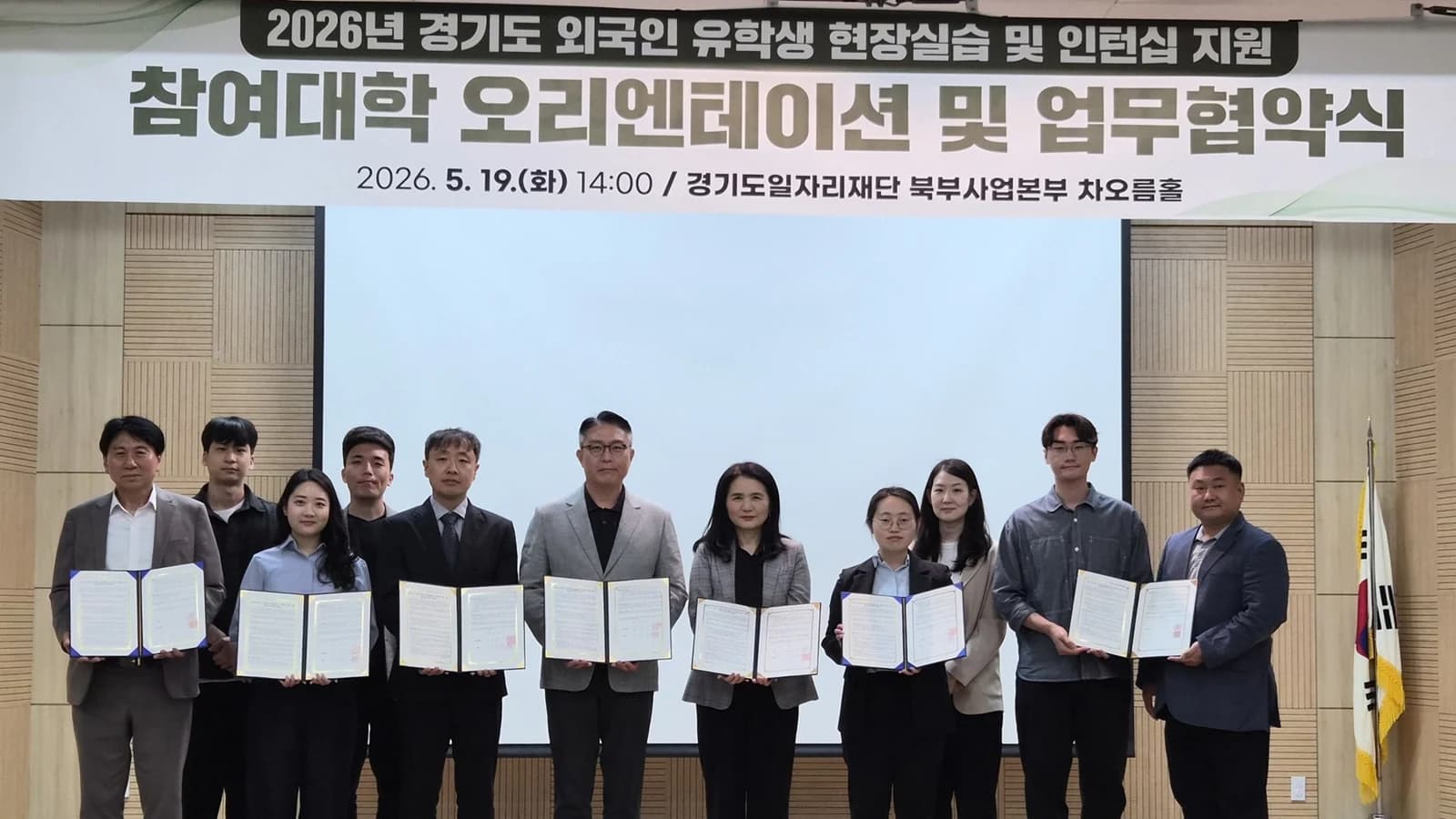
Gyeonggi Province has designed a work-experience and internship program linking international students with companies in the province, with a target of 30 participants. Six universities are taking part: Gyeonggi University of Science and Technology, Kyungbok University, Dankook University, Seojeong University, Shin Ansan University, and Tech University of Korea. The plan runs from July through December.
Universities select candidates from among their students and graduates, and the Gyeonggi Job Foundation connects them with companies seeking interns. Universities also manage students during the placement period. Each company receives KRW 1,000,000 in operating support for the work-experience program.
Four junior colleges and two four-year universities connect five cities
| Participating university | Type | City | International students, 2025 |
|---|---|---|---|
| Gyeonggi University of Science and Technology | Junior college | Siheung | 449 |
| Kyungbok University | Junior college | Namyangju | 910 |
| Dankook University | Four-year university | Yongin | 956 |
| Seojeong University | Junior college | Yangju | 5,092 |
| Shin Ansan University | Junior college | Ansan | 1,340 |
| Tech University of Korea | Four-year university | Siheung | 529 |
The participating institutions comprise four junior colleges and two four-year universities. Gyeonggi University of Science and Technology and Tech University of Korea are both in Siheung, while one institution each participates from Namyangju, Yongin, Yangju, and Ansan. The program brings together universities from western, northern, and southern parts of the province.
The six universities reported a combined 9,276 international students in 2025. The target of 30 is not a large-scale recruitment program for all of those students; it is closer to a small pilot in which universities select candidates and link them with companies. The participating universities also vary greatly in international-student enrollment, from 5,092 at Seojeong University to 449 at Gyeonggi University of Science and Technology.
Universities select candidates; companies provide practical experience
The program starts with universities. Under the agreement, each university selects international students and graduates who will participate in work experience, connects their majors with company work, and supports student management and operations after placements begin.
Companies provide places where students can participate in actual work. The Gyeonggi Job Foundation provides participating companies with KRW 1,000,000 in operating support. This was not announced as wages paid to students; it is funding to help companies operate work-experience placements. Student pay and working conditions must be checked in the separate contracts and guidance at the actual matching stage.
Work experience does not in itself mean employment. The foundation said it would offer job counseling and placement assistance to students who want it if their placements do not lead to regular employment. The structure aims to connect practical experience, hiring, and follow-up placement support.
July start planned; actual placement numbers not yet disclosed
In its April project plan, Gyeonggi Province named 30 people, including current university students and graduates in the province, as support targets. In May, it selected six universities and held an agreement ceremony and orientation, announcing that work experience was scheduled to run from July to December.
As of August 10, Gyeonggi's official materials do not show how many people have actually been placed with which companies or how many companies are participating. The 30-person figure is therefore a program target, not a completed selection count. The currently confirmed stage extends through program design, agreements with participating universities, and the operating schedule.
Tech University of Korea's International Education Center posted news of work-experience and internship operations for international students on July 23. Individual universities have begun activities, but results for placements across all six universities can be aggregated only after a follow-up announcement from Gyeonggi Province or the Gyeonggi Job Foundation.
The regional visa pilot is a separate policy track
Alongside the work-experience program, Gyeonggi Province is also pursuing a regional visa pilot. The program supports applications for the E-7 visa for specific activities through a governor's recommendation. It covers 12 occupations: 11 E-7-1 professional occupations including computer hardware, software, data, information security, and robotics engineering, plus one E-7-2 occupation for care workers.
The two programs share the broad goal of helping international talent settle in Gyeonggi, but they operate differently. Work experience is a program in which universities and companies provide students with practical work experience, while the regional visa is a system supporting applications for a status of stay through specified occupations and a recommendation procedure. Participation in work experience does not automatically guarantee an E-7 recommendation or work authorization.
Six universities test career support after admission
Related Articles
- Policy
- Policy
- Policy
- Policy
- Policy
- Policy