

Foreign Seasonal Workers Expected to Reach 110,000… Ministry of Justice Discusses Metropolitan-Level Management System
The Ministry of Justice discussed measures with 11 metropolitan local governments to strengthen specialized institutions for seasonal workers, employer training, and human rights protection. It plans to designate specialized institutions in the second half of the year and proceed with the 2027 allocation process.
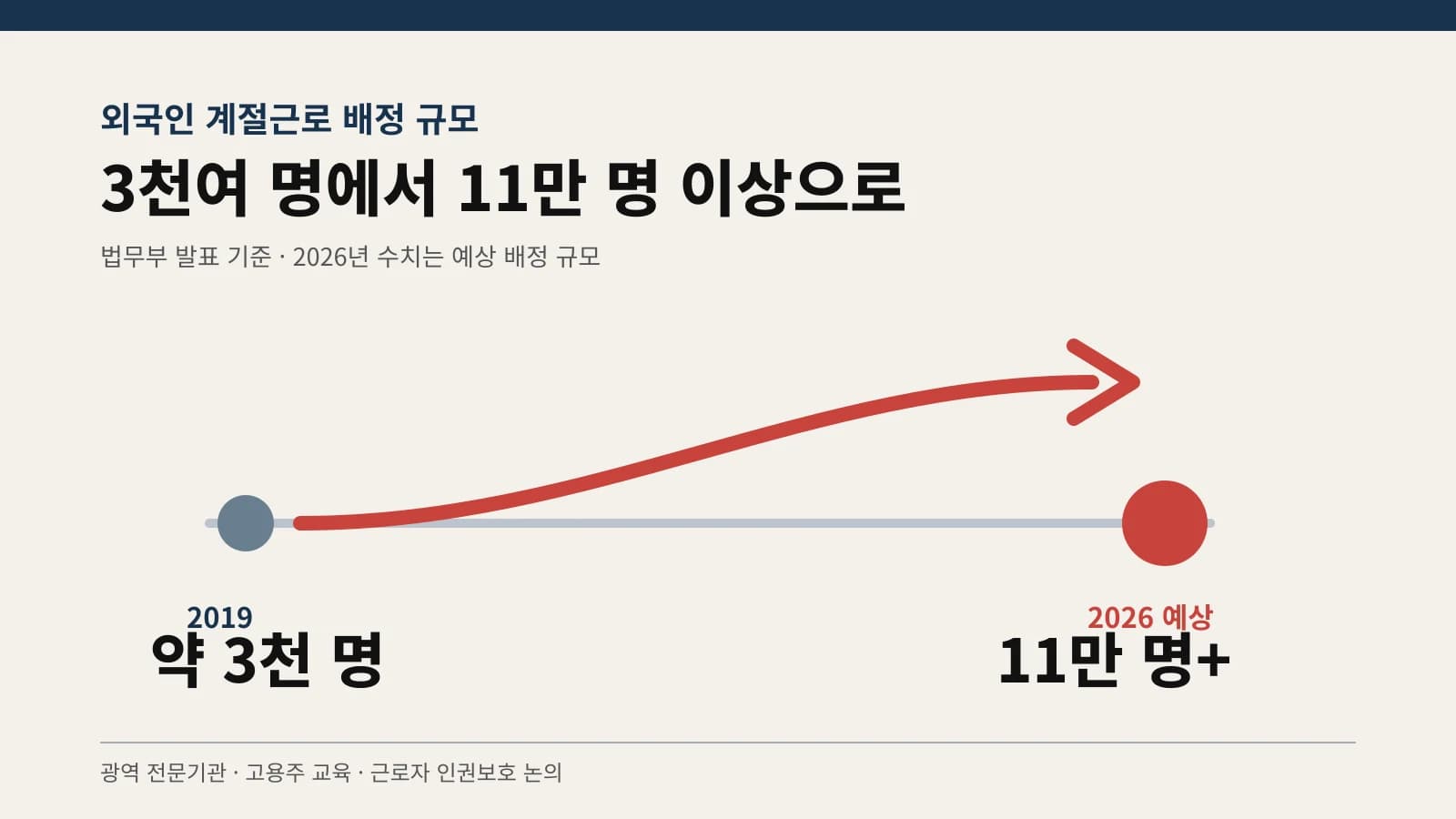
Key Points
- As the number of foreign seasonal workers allocated is expected to rise from about 3,000 people in 2019 to more than 110,000 people in 2026, the government has begun discussing ways to expand metropolitan local governments’ management role.
- On August 11, the Ministry of Justice held a meeting at the Government Complex in Gwacheon with about 30 participants, including bureau directors responsible for 11 metropolitan local governments nationwide.
As the number of foreign seasonal workers allocated is expected to rise from about 3,000 people in 2019 to more than 110,000 people in 2026, the government has begun discussing ways to expand metropolitan local governments’ management role.
On August 11, the Ministry of Justice held a meeting at the Government Complex in Gwacheon with about 30 participants, including bureau directors responsible for 11 metropolitan local governments nationwide. The discussion focused on metropolitan-level specialized institutions, training for agricultural and fisheries employers, and human rights protection for seasonal workers.
From City, County, and District-Centered Management to Metropolitan Coordination
The foreign seasonal worker program allows foreign nationals to work in the country for up to 8 months to ease seasonal labor shortages in rural areas. Until now, cities, counties, and districts have primarily been responsible for its introduction and management.
The Ministry of Justice explained that as the scale of the program grew, administrative work increased and differences in local operations also widened. It judged that metropolitan local governments now need a role in coordinating demand and operations across multiple cities and counties.
The meeting addressed three tasks.
| Discussion Task | Details |
|---|---|
| Metropolitan Specialized Institutions | Designation and operation of metropolitan-level specialized institutions for seasonal workers |
| Employer Training | Systematization of training for agricultural and fisheries employers |
| Worker Protection | Strengthening human rights protection for seasonal workers |
Specialized Institutions to Be Designated in the Second Half of the Year; 2027 Allocation Process Planned
Drawing on opinions from the meeting, the Ministry of Justice plans to designate local specialized institutions for seasonal workers in the second half of this year and proceed with the 2027 seasonal worker allocation process. It will also continue consultations among metropolitan local governments that share local issues and best practices.
This announcement is at the stage of discussing directions for improving the program. The number of specialized institutions and the areas selected, the number of people allocated to each area in 2027, and the application and placement procedures for individual workers have not yet been disclosed. Actual changes can be confirmed in the second-half designation results and the 2027 allocation announcement.
Related Articles
- Policy
- Policy
- Policy
- Policy
- Policy
- Policy
Comments
Please sign in to post a comment.
You will return to this article after sign-in.
Sign inNo comments yet.