

Choosing a Transit Card in Seoul: Climate Companion Pass, K-Pass, and Short-Term Passes for International Students
A guide for international students in Seoul choosing among the Climate Companion Pass, Modu Card/K-Pass, Climate Card short-term passes, and Tmoney after September 1, 2026, based on foreign registration number, Seoul residency, existing K-Pass enrollment, and travel range.
Key Points
- Bottom line: from September 2026, international students in Seoul should look beyond card names and first check whether they have a foreign registration number, actually live in Seoul, already use K-Pass or Modu Card, and how often they travel outside Seoul.
- If they do not yet have a foreign registration number, they cannot move directly to K-Pass signup and Seoul residency verification, so they can begin with a Tmoney card or a Climate Card short-term pass that remains available.
Bottom line: from September 2026, international students in Seoul should look beyond card names and first check whether they have a foreign registration number, actually live in Seoul, already use K-Pass or Modu Card, and how often they travel outside Seoul. If they do not yet have a foreign registration number, they cannot move directly to K-Pass signup and Seoul residency verification, so they can begin with a Tmoney card or a Climate Card short-term pass that remains available. For long-term students with a foreign registration number who can verify Seoul residency, the Climate Companion Pass process differs depending on whether they are existing or new users.
The Seoul Metropolitan Government announced in its August 27, 2026 press release that it would launch “Modu Card (Climate Companion Pass),” combining the central government’s Modu Card with Seoul-specific services for city residents on September 1, 2026. Existing K-Pass or Modu Card users who completed Seoul residency verification when joining K-Pass receive the Climate Companion Pass-specific service automatically, without changing cards. New users must obtain a card from a participating issuer and complete the K-Pass registration process.
How transit card choices changed on September 1
The existing 30-day Climate Card is a long-term product offered in prepaid and postpaid forms, while the new Climate Companion Pass adds Seoul-specific services for Seoul residents within the Modu Card/K-Pass system. The existing 30-day pass is being phased out. By contrast, the 1-day, 2-day, 3-day, 5-day, and 7-day Climate Card short-term passes remain available.
Seoul’s guidance highlights four points.
- The Climate Companion Pass took effect on September 1, 2026. It combines Seoul-specific services with the government’s Modu Card.
- Climate Companion Pass eligibility is based on Seoul residency. Seoul’s English-language Climate Card guide says people with a foreign registration number can create an account and that the Climate Companion Pass is available to Seoul residents.
- The process differs for existing and new users. Existing K-Pass or Modu Card users who verified Seoul residency when they joined have the service applied automatically from September 1. New users must get a card from a participating issuer and register it with K-Pass, and Seoul’s English-language guide states that benefits under the new process begin the following month.
- The Seoul-specific youth age range for the Climate Companion Pass is 19–39. The official K-Pass guide sets the standard youth range at 19–34, so these age ranges should be checked separately.
Start by distinguishing the five options
| Category | What it is | As of September 2026 | What international students should check |
|---|---|---|---|
| Climate Companion Pass | A program combining the government’s Modu Card with Seoul-specific services for residents of Seoul | Launched September 1, 2026 | Check your foreign registration number and Seoul residency. The process differs for existing and new users |
| Modu Card/K-Pass | A system that provides transit-fare support across participating regions and eligible transport modes nationwide | Operates based on K-Pass member information and address verification | Existing users who completed Seoul residency verification may automatically receive the Climate Companion Pass-specific service |
| Existing 30-day Climate Card | An existing long-term product used on a prepaid or postpaid basis | Prepaid 30-day top-ups have ended, and both prepaid and postpaid operations are being phased out | Check your final day of use and then review the eligibility requirements for the new long-term system |
| Climate Card short-term passes | The existing Climate Card’s 1-day, 2-day, 3-day, 5-day, and 7-day passes | Remain available | Seoul’s transition notice describes coverage as “Seoul”; check the current Climate Card service area for eligible routes and segments |
| Tmoney transit card | A transit card used to pay public transportation fares | Tmoney’s foreign-language guidance says it can be used on public transportation nationwide | It can serve as a basic payment method after arrival or during short stays; check K-Pass and Climate Companion Pass refund eligibility separately |
In particular, the Climate Companion Pass and Climate Card short-term passes work differently. The Climate Companion Pass is a Seoul-resident-specific service linked to K-Pass membership and address verification, while the short-term passes are time-based passes that remain within the existing Climate Card system.
Use your situation to decide what to check first
| Your situation | First option to consider | Why | Next action |
|---|---|---|---|
| Just arrived and do not yet have a foreign registration number | Tmoney transit card or a Climate Card short-term pass | K-Pass signup requires a foreign registration number and address verification | Get a way to pay for travel now, then reassess long-term benefit options after receiving your foreign registration number |
| Have a foreign registration number, actually live in Seoul, and are not enrolled in K-Pass | New-user Climate Companion Pass process | The Climate Companion Pass is for Seoul residents, and new users need card issuance and K-Pass registration | Obtain a card from a participating issuer → join K-Pass and register the card → complete issuer-side registration if required for the card → confirm benefits from the following month |
| Already use K-Pass or Modu Card and verified Seoul residency when joining | Keep using your existing card | Seoul says the Seoul-specific service is applied automatically, with no need to switch to a separate Climate Companion Pass card | Check that the address in your K-Pass account matches your current Seoul residence |
| Your school is in Seoul but you actually live outside Seoul | K-Pass benefits based on your actual address | Climate Companion Pass eligibility is based on residence, not school location | Verify your actual address in K-Pass and check which support applies to that address |
| You are staying in Seoul for only a few days | Climate Card short-term pass or Tmoney transit card | The 1-day, 2-day, 3-day, 5-day, and 7-day short-term passes remain available, while Tmoney is a fare-payment method rather than a time-based pass | Choose based on the length of your stay and the routes you will actually use |
| You frequently commute or travel outside Seoul | Check K-Pass-eligible transport modes and your actual residence first | K-Pass covers transport such as metropolitan buses and urban or metropolitan rail, but some modes are excluded | Check whether your frequent routes are K-Pass eligible, then, if you live in Seoul, also check whether the Climate Companion Pass applies |
When you first arrive, check whether you have a foreign registration number
Right after arrival, university registration, dormitory move-in, phone setup, and immigration-related procedures can all overlap. At this stage, if you do not yet have a foreign registration number, start with a Tmoney transit card or a short-term pass rather than trying to enroll in the Climate Companion Pass first.
Seoul’s English-language guidance bases enrollment not on possession of a physical residence card, but on account registration using a foreign registration number and verification of Seoul residency. It therefore helps to separate the stage before you receive the number from the stage when you can use it for K-Pass address verification.
If you are staying in Seoul briefly and considering a short-term pass, choose among the 1-day, 2-day, 3-day, 5-day, and 7-day options based on your length of stay. Check the actual coverage of short-term passes by route and boarding/alighting segment in Seoul’s English-language Climate Card service-area guide. Separate coverage rules apply to Seoul-licensed buses and some rail segments in the wider capital region.
Tmoney is a separate, basic fare-payment option. Tmoney’s guide for foreign visitors says Tmoney can be used on public transportation nationwide. This describes Tmoney’s payment coverage; refund eligibility under K-Pass or the Climate Companion Pass is determined separately under each program’s membership, residency, and transport-mode rules.
For long-term students, the process differs for existing and new users
If you have a foreign registration number and actually live in Seoul, the next question is whether you already use K-Pass or Modu Card.
Existing users who verified Seoul residency when joining K-Pass do not need to switch to a separate Climate Companion Pass card. Seoul says that, from September 1, 2026, the Climate Companion Pass-specific service is automatically applied to existing K-Pass or Modu Card users who meet this condition.
New users must obtain a card from a participating issuer and then complete K-Pass membership and card registration. Seoul’s August 27 press release says that users of newly issued Climate Companion Pass cards must complete membership and card registration on both the K-Pass website and the card issuer’s website to receive benefits. Seoul’s English-language Climate Card page explains that after a card is issued by a participating issuer and registered with K-Pass, benefits begin the following month.
The official K-Pass usage guide lists the membership process in this order.
- Enter the issued card’s 15–16-digit card number and verify it.
- After agreeing to the required terms, verify your identity with a mobile phone registered in your name or a Joint Certificate.
- Enter your resident registration number or foreign registration number and verify your address.
- If residency cannot be verified automatically, upload the resident registration certificate or abstract, or a certificate of domestic residence for foreigners, “issued within 1 month” required by the official guide under
MY > 나의지자체. - Enter the required membership information and complete signup.
In the official K-Pass wording, “issued within 1 month” refers to the issuance-date requirement for documents uploaded under MY > 나의지자체.
Ages 19–39 are the Seoul-specific youth range for the Climate Companion Pass
Seoul expanded the Seoul-specific youth range for the Climate Companion Pass from ages 19–34 to ages 19–39. As a result, users ages 35–39 who meet the Seoul residency requirement also fall within the Climate Companion Pass’s Seoul-specific youth range.
By contrast, the official K-Pass guide sets the standard K-Pass youth range at ages 19–34. Even though both use the K-Pass membership system, the Seoul-specific Climate Companion Pass age range and the standard K-Pass youth range must be checked separately.
Students living outside Seoul should check both residency and transport mode
Attending a university in Seoul does not by itself determine eligibility for the Climate Companion Pass. Seoul’s English-language guidance states that Climate Companion Pass eligibility is based on residency. If your university is in Seoul but you actually live outside the city, such as in Gyeonggi or Incheon, first verify your actual address in K-Pass and check which support applies to that address.
Check transport-mode coverage separately for Climate Card short-term passes and K-Pass-based programs. The official K-Pass usage guide says eligible transport includes buses, including metropolitan buses; urban and metropolitan rail, including the Shinbundang Line and GTX; and the Airport Railroad. Intercity and express buses, KTX, SRT, airport buses, and other separately ticketed services are excluded from K-Pass eligibility.
When Seoul describes Climate Companion Pass travel on nationwide public transit such as GTX, the Shinbundang Line, and metropolitan buses, it is referring to the Modu Card/K-Pass-based refund structure. Climate Card short-term passes use a separate Climate Card service area.
Check the end dates for the existing 30-day Climate Card separately
According to Seoul’s Climate Card phase-out schedule, the transition schedule for long-term and short-term products is as follows.
| Category | 2026 transition schedule |
|---|---|
| Prepaid 30-day Climate Card | Top-ups ended August 31, and the last top-up has a final use date of September 29 |
| Postpaid Climate Card | Final use date: September 30 |
| Prepaid and postpaid Climate Card operations | End October 1 |
| Climate Card short-term passes | Remain available. Seoul’s transition notice describes the coverage as “Seoul” |
| Climate Companion Pass | Launched September 1 |
Prepaid 30-day passes topped up by August 31 can be used until that top-up expires, with September 29 as the final day of use. The postpaid Climate Card’s final day of use is September 30. Prepaid and postpaid Climate Card operations end on October 1, while short-term passes remain available.
5-step checklist before signing up for the Climate Companion Pass
- [ ] 1. Check that you have a foreign registration number. If you do not yet have one, start with a Tmoney transit card or a short-term pass.
- [ ] 2. Check whether your actual residence is in Seoul. Climate Companion Pass eligibility is based on residence, not your school’s location.
- [ ] 3. Check whether you already use K-Pass or Modu Card. If you are an existing user and verified Seoul residency when joining, confirm that the service is applied automatically without changing cards.
- [ ] 4. If you are a new user, complete card issuance and registration. After receiving a card from a participating issuer, join K-Pass and register the card, and complete issuer-side registration if required for that card. If your address is not verified automatically, upload the recently issued document required by K-Pass under
MY > 나의지자체. - [ ] 5. Check the benefit start date and your actual commuting routes. New users should confirm that benefits begin the following month in Seoul’s English-language guidance, and if you travel outside Seoul, check whether your frequent transport modes are K-Pass eligible.
From September 2026, international students in Seoul can narrow down the right option by checking foreign registration number → actual residence → existing K-Pass enrollment → commuting range → benefit start date in that order. New arrivals can start with Tmoney or a short-term pass; long-term students who have verified Seoul residency can follow the existing- or new-user Climate Companion Pass process; and residents outside Seoul can compare K-Pass options based on their actual address.
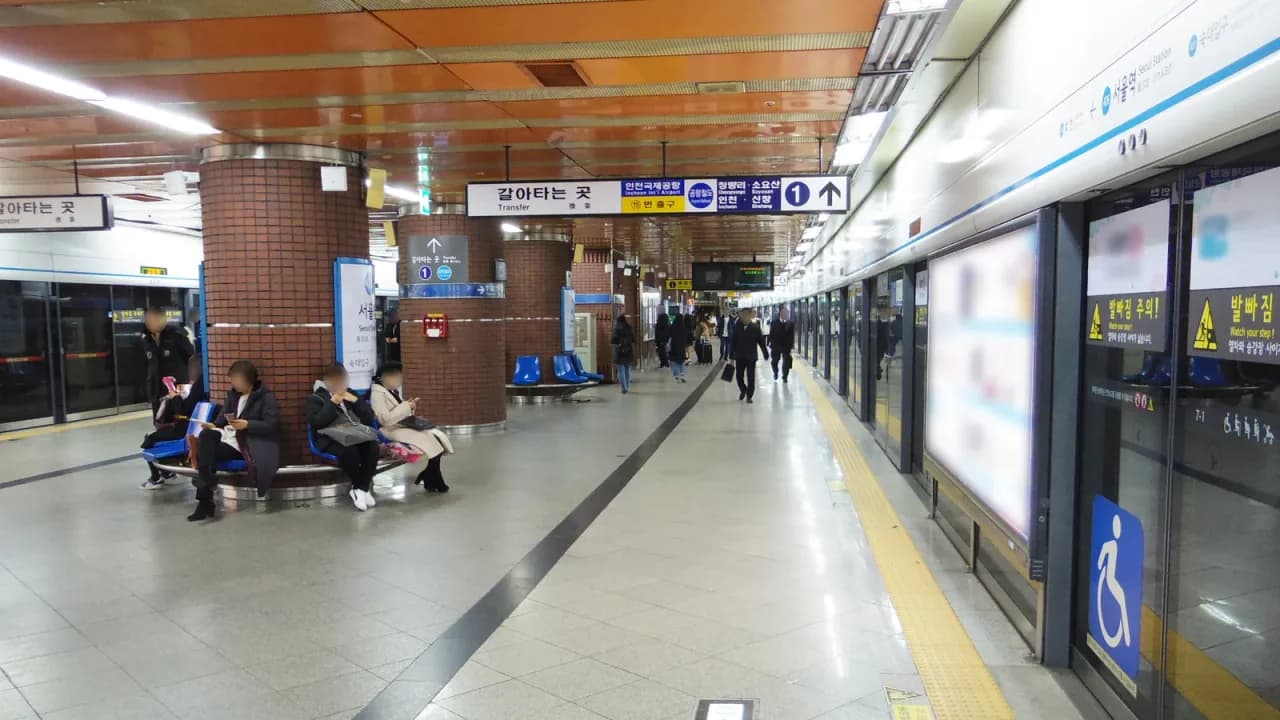
Photo: LERK, “Seoul-metro-426-Seoul-station-platform-20181122-173020.jpg”, CC BY-SA 4.0. The original was resized and converted to 1600×900 WebP without cropping.
Related Articles
- Policy
- Policy
- Policy
- Policy
- Policy
- Policy
Comments
Please sign in to post a comment.
You will return to this article after sign-in.
Sign inNo comments yet.